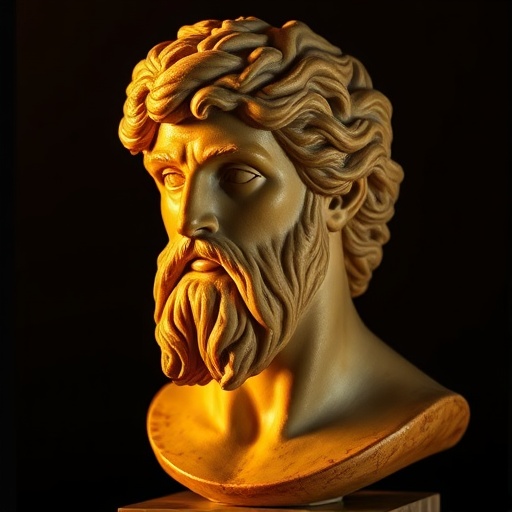
Pythagoras — "When abroad, don't turn back at the border."
When abroad, don't turn back at the border.
When abroad, don't turn back at the border.
Click any product to generate a realistic preview. Up to 3 at a time.
* Initial load can take up to 90 seconds — revising the preview in another color is nearly instant.
"Do not offer the right hand to everyone."
"Learn to be silent. Let your quiet mind listen and absorb."
"The monad, is god and the good, which is the origin of the One, and is itself intelligence; but the undefined dyad is a deity and the evil, surrounding which is the mass of matter."
"Don't piss towards the sun."
"Not to speak of Pythagorean beans, from which, it is said, Pythagoras himself abstained."
Greek philosopher and mathematician whose school in Croton combined geometry (the Pythagorean theorem), number-mysticism, and a religious-vegetarian way of life. Closely associated with Thales of Miletus (earlier pre-Socratic and the first philosopher). For an intellectual contrast, see Heraclitus, pre-Socratic Greek philosopher of flux — Heraclitus called Pythagoras 'the chief of swindlers' — among the founding insults of the philosophical-rivalry tradition. Their 'all is flux' vs 'all is number' poles still organize the philosophy of mathematics today (Platonist vs anti-realist).
A Pythagorean 'Symbol', interpreted as not clinging desperately to life when leaving it.
Date: c. 570-495 BCE (interpreted 3rd century CE)
WisdomFound in 1 providers: gemini
1 source checked
Once you've set out on a path, don't retreat out of fear or hesitation. Starting a journey creates commitment — turning back mid-course signals indecision and wastes the courage it took to leave in the first place. The maxim urges decisiveness: if circumstances justified departure, they still do. Commit fully to what you've begun, push through uncertainty, and trust the direction you chose before doubt crept in.
Pythagoras embodied this principle personally — he left his birthplace of Samos, studied in Egypt and Babylon, and eventually settled in Croton to build his philosophical brotherhood rather than return home. His community demanded total commitment; initiates swore years-long silence before full membership. A man who staked his life on radical intellectual and spiritual journeys would naturally preach against the cowardice of retreating once a course was set.
In 6th-century BCE Greece, turning back after departing was considered a terrible omen — bad luck that could doom the entire journey. Travelers performed elaborate pre-departure rituals, and reversing course mid-trip required restarting those rites from scratch. This was also the age of Greek colonization, when thousands permanently left their home cities for new settlements abroad. Decisive, irreversible commitment wasn't just philosophy — it was a survival necessity for colonists who couldn't second-guess their exodus.
AI-generated insights based on extensive research and information for context. Factual errors? Email [email protected].
Your cart is empty