Laozi — "When the government is lax, the people are simple. When the government is meddle…"
When the government is lax, the people are simple. When the government is meddlesome, the people are discontented.
When the government is lax, the people are simple. When the government is meddlesome, the people are discontented.
Click any product to generate a realistic preview. Up to 3 at a time.
* Initial load can take up to 90 seconds — revising the preview in another color is nearly instant.
"Truthful words are not always beautiful; beautiful words are not always truthful."
"He who knows does not speak. He who speaks does not know."
"If you do not change direction, you may end up where you are heading."
"I do not act, and people become reformed by themselves. I am at peace, and people become fair by themselves. I do not interfere, and people become rich by themselves."
"Therefore the sage manages affairs without doing anything, and conveys his instructions without the use of speech."
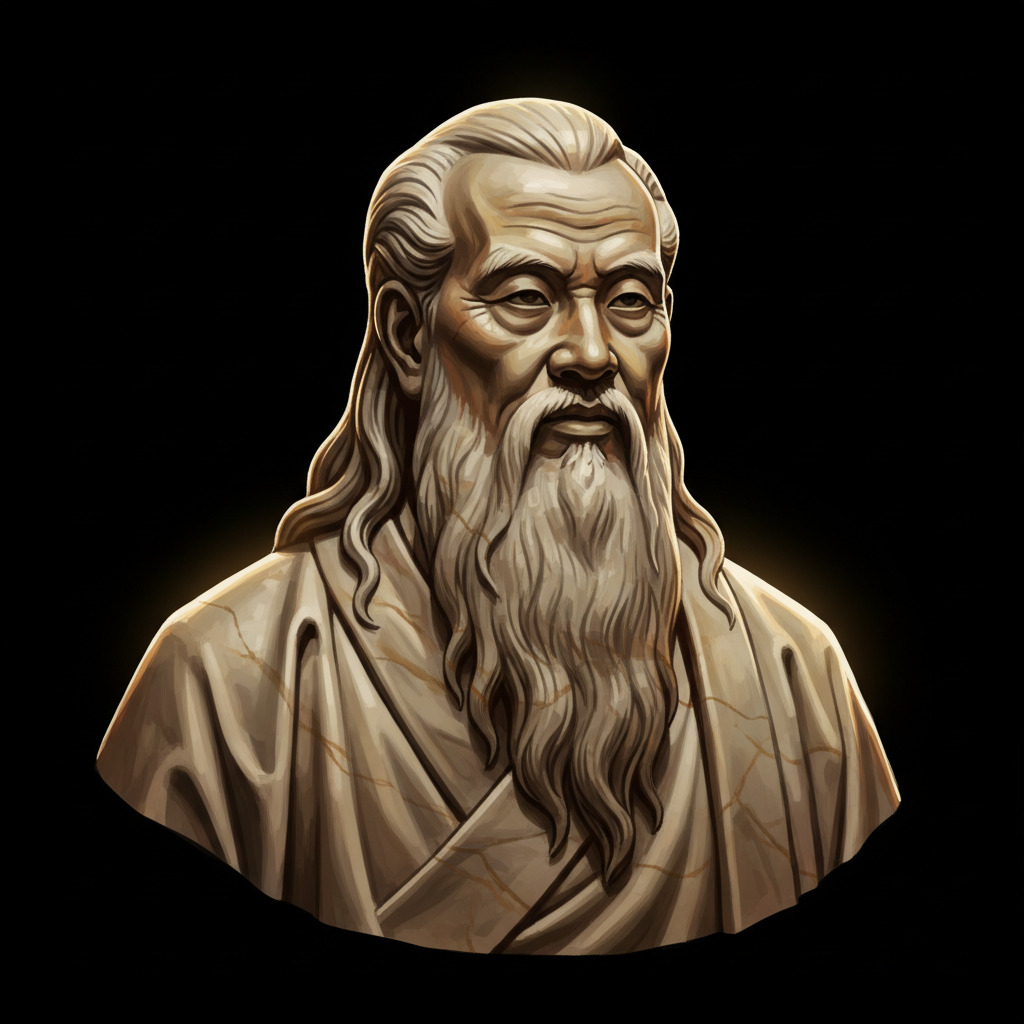
Reputed founder of Taoism and author of the Tao Te Ching, whose wu wei (effortless action) shaped East Asian philosophy. Closely associated with Zhuangzi (later Taoist who extended Laozi's framework). For an intellectual contrast, see Confucius, near-contemporary Chinese sage of social ritual and duty — Confucius systematized social order through ritual and hierarchy; Laozi argued that all such systems were the disease, not the cure — the two founding poles of Chinese moral philosophy.
Found in 1 providers: grok
1 source checked
Light, hands-off governance produces content, straightforward citizens who live naturally and trust their leaders. Heavy-handed rule that pries into everyone's affairs, piles on regulations, and constantly intervenes breeds resentment, cunning, and unrest. The more officials push, the more people resist or game the system. Simplicity in leadership invites simplicity in the governed; complication breeds complication. Govern less, and people will settle themselves; govern too much, and you manufacture the very problems you claim to solve.
Laozi reportedly served as a royal archivist in the Zhou court, watching firsthand as bureaucratic machinery expanded while the dynasty decayed. Disillusioned, he is said to have ridden west on a water buffalo, leaving the Tao Te Ching at the border. His core teaching, wu wei, or effortless action, insists that forcing outcomes corrupts them. This saying distills his political philosophy: the sage ruler does little, trusts the natural order, and lets harmony emerge rather than legislating it into existence.
Laozi lived during the Spring and Autumn period of roughly the sixth century BCE, as the Zhou dynasty fragmented into warring states. Rulers piled on taxes, conscription, surveillance, and Legalist-style controls to squeeze peasants and wage war. Confucian reformers pushed elaborate rituals and hierarchies as a fix. Laozi saw both projects as symptoms of the same disease: overreach. Peasants groaned under micromanagement while nobility schemed. His call for minimal government was a direct rebuke of an era drowning in rules, armies, and ambitious statecraft.
AI-generated insights based on extensive research and information for context. Factual errors? Email [email protected].
Your cart is empty