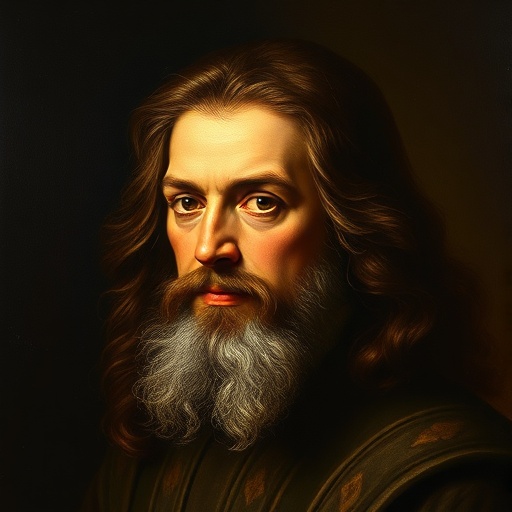
Leonardo da Vinci — "Where there is shouting, there is no true knowledge."
Where there is shouting, there is no true knowledge.
Where there is shouting, there is no true knowledge.
Click any product to generate a realistic preview. Up to 3 at a time.
* Initial load can take up to 90 seconds — revising the preview in another color is nearly instant.
"Among the great things which are to be found among us, the Being of Nothingness is the greatest."
"Oh! how many are the times that I have been deceived!"
"He who wishes to be rich in a day will be hanged in a year."
"The greatest good is that which is desired by all."
"The memory of all that is past is as nothing in comparison with the knowledge of what is to come."
Found in 1 providers: grok
1 source checked
Genuine knowledge demands quiet attention, careful observation, and methodical reasoning — none of which survive in an atmosphere of loud argument. When people shout, they are asserting dominance or emotion, not seeking truth. Real understanding is earned through patient study, not won through volume. This is a defense of calm, evidence-based inquiry over rhetorical force, suggesting that noise is the enemy of learning.
Da Vinci filled over 7,000 pages of private notebooks with meticulous observations, never publishing for public debate. Largely self-taught, he prized saper vedere — knowing how to see — over scholastic argument. He was skeptical of those who claimed authority through assertion rather than demonstration. His anatomical dissections, engineering designs, and paintings all emerged from solitary, disciplined observation, not disputation. For him, quietness was the precondition of understanding.
Leonardo lived during the Renaissance (1452–1519), when university education was dominated by scholasticism — formal public disputations where scholars argued loudly from Aristotelian texts. The printing press was new, slowly democratizing knowledge. Humanist thinkers were beginning to challenge church-backed authority with empirical observation. Da Vinci's era valued rhetoric and oration as intellectual currency; his insistence that noise precludes knowledge was a quiet rebuke of that dominant academic culture.
AI-generated insights based on extensive research and information for context. Factual errors? Email [email protected].
Your cart is empty