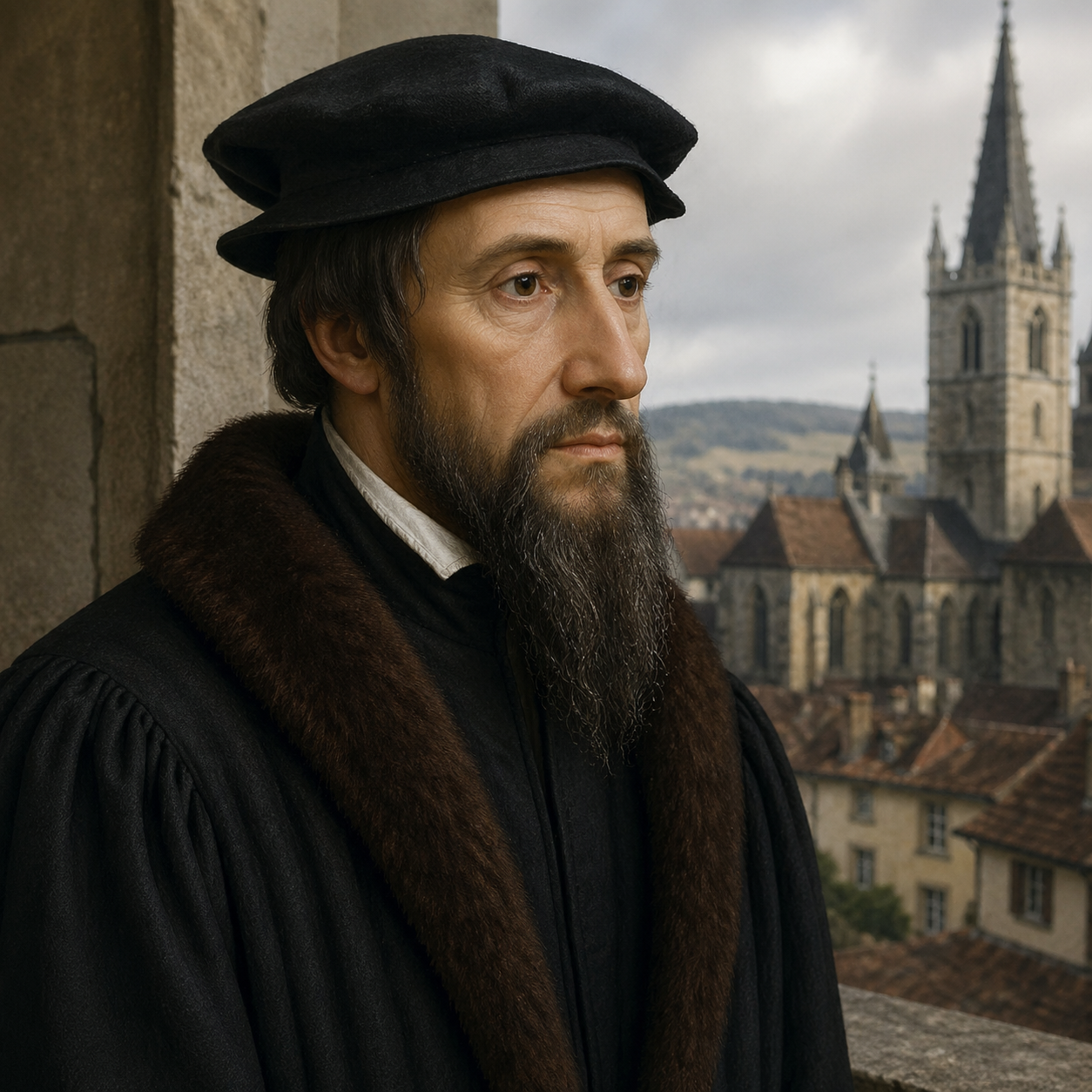
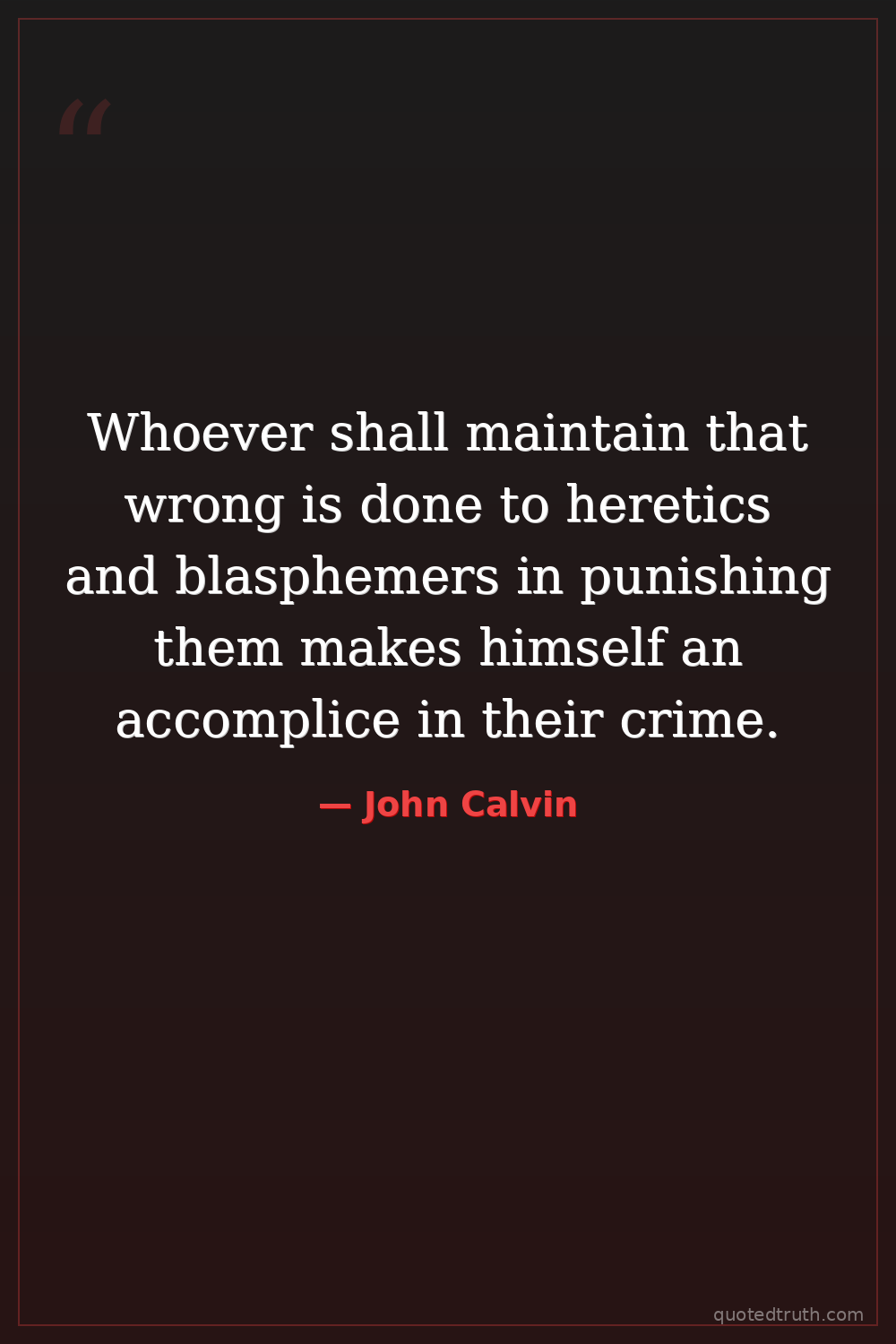
John Calvin — "Whoever shall maintain that wrong is done to heretics and blasphemers in punishi…"
Whoever shall maintain that wrong is done to heretics and blasphemers in punishing them makes himself an accomplice in their crime.
Whoever shall maintain that wrong is done to heretics and blasphemers in punishing them makes himself an accomplice in their crime.
Click any product to generate a realistic preview. Up to 3 at a time.
* Initial load can take up to 90 seconds — revising the preview in another color is nearly instant.
"Our salvation is assured, not by our own works, but by the election of God."
"The grace of God is the only foundation of our salvation."
"...those whom God passes over [praeterit], he condemns [reprobat]; and this he does for no other reason than that he wills to exclude them from the inheritance which he predestines [praedestinat] for …"
"The reprobate are not bound to believe, because God does not give them the grace to believe."
"It is not in vain that he banishes all those human affections which soften our hearts; that he commands paternal love and all the benevolent feelings between brothers, relations, and friends to cease;…"
French theologian whose Institutes of the Christian Religion (1536) systematized Protestant Reformed doctrine, including predestination. Closely associated with Martin Luther (Reformation founder, Calvin's predecessor). For an intellectual contrast, see Jacobus Arminius, Dutch Reformed theologian (1560-1609) — Arminius's rejection of strict double-predestination founded Arminianism — the theological tradition modern Methodism, most evangelicalism, and Pentecostalism descend from. The Calvinist-Arminian debate has divided Protestantism for 400 years.
Found in 1 providers: deepseek
1 source checked
This quote asserts that defending heretics or blasphemers against punishment makes one morally guilty alongside them. Calvin argues that objecting to religious persecution is itself a form of complicity in heresy — you cannot be innocent while shielding the guilty. It frames tolerance of doctrinal error as a crime equal to committing it, turning sympathy for the condemned into evidence of one's own guilt.
Calvin wielded enormous authority over Geneva's civil and religious life, treating the city as a model Christian community. He personally engineered the execution of Michael Servetus in 1553 for anti-Trinitarian heresy and defended it vigorously afterward. Calvin believed godly magistrates had a scriptural duty to suppress false doctrine. This quote encapsulates his theology of total accountability — not punishing heresy was itself sinful governance, a betrayal of God's law.
The early Reformation was defined by violent doctrinal battles across Europe. Heresy executions were routine — Catholics burned Protestants, and Protestants executed one another over doctrine. Calvin's Geneva operated as a theocracy where blasphemy and heresy were criminal offenses. Sebastian Castellio's contemporaneous plea for religious tolerance directly challenged Calvin, making this quote a pointed rebuttal to emerging ideas that conscience should be free from state coercion.
AI-generated insights based on extensive research and information for context. Factual errors? Email [email protected].
Your cart is empty