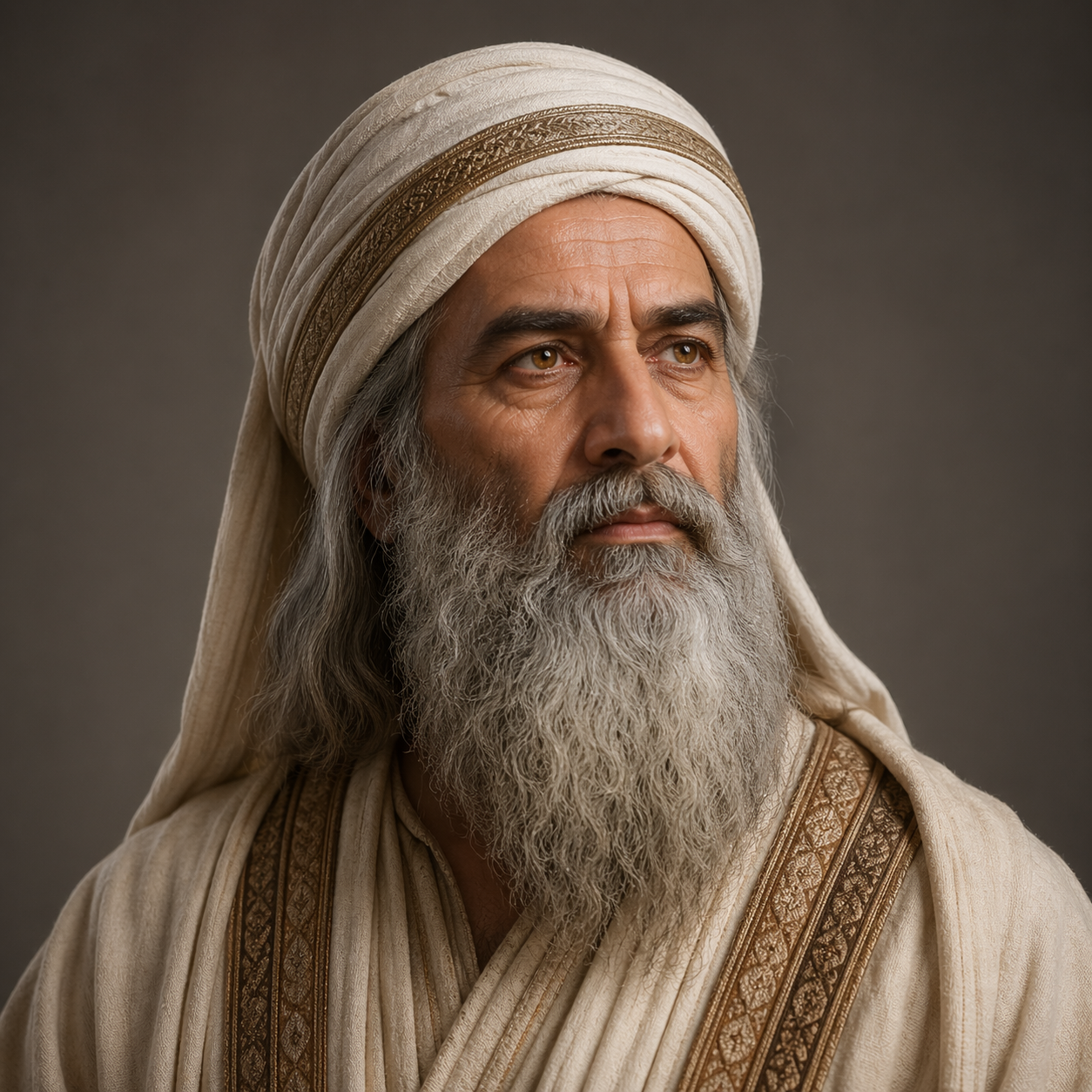
Zoroaster — "Whoso causes affliction to the righteous, him shall the evil spirit hold captive…"
Whoso causes affliction to the righteous, him shall the evil spirit hold captive.
Whoso causes affliction to the righteous, him shall the evil spirit hold captive.
Click any product to generate a realistic preview. Up to 3 at a time.
* Initial load can take up to 90 seconds — revising the preview in another color is nearly instant.
"I try, O Mazda, through the radiance of wisdom to know You. You who are the creator of existence."
"May we attain to the state of perfection, O Ahura Mazda."
"I know, O Wise One, that I am powerless; I have few cattle and few men."
"For the wicked man, the end of existence shall be long darkness, ill food, and the word 'woe!'"
"In the beginning, these two spiritualities, which are twins, were perceived in a vision by the righteous. The better and the bad have been said to be thought, word, and deed, and between these two the…"
Iranian prophet who founded Zoroastrianism, the first major religion of cosmic dualism between good (Ahura Mazda) and evil (Angra Mainyu). Closely associated with The Buddha (near-contemporary Eastern moral-cosmological revolutionary). For an intellectual contrast, see Friedrich Nietzsche, German philosopher of 'beyond good and evil' — Nietzsche appropriated Zarathustra's name for Thus Spoke Zarathustra (1883) precisely to invert the original's moral cosmology — the historical Zoroaster founded the good-versus-evil framework Nietzsche's character announces the end of.
Found in 1 providers: grok
1 source checked
If you harm someone who lives rightly and honestly, you bind yourself to evil. The act of oppressing a good person isn't just wrong toward them; it pulls the aggressor under the power of a destructive force. Cruelty to the virtuous corrupts the cruel one, trapping them in the very darkness they inflicted. In short, harming the good makes you a prisoner of wickedness itself.
Zoroaster founded a faith built on the cosmic struggle between Ahura Mazda, the wise lord of truth (asha), and Angra Mainyu, the evil spirit. As a priest and prophet, he reframed morality as a personal choice with spiritual consequences. This saying mirrors his core teaching: the righteous (ashavan) are protected by truth, while those who attack them align themselves with the Lie (druj) and become captives of the evil mind.
Zoroaster preached in ancient Iran, likely around 1500–1000 BCE, among pastoral tribes dominated by warrior raids, cattle theft, and polytheistic blood sacrifice. Rival chieftains and priests often persecuted peaceful herders and reformers. His message introduced a revolutionary ethical monotheism in a violent, tribal landscape, offering the oppressed a promise that injustice carried its own supernatural punishment. Against a backdrop of lawless raiding, the idea that evil binds the evildoer was radical justice.
AI-generated insights based on extensive research and information for context. Factual errors? Email [email protected].
Your cart is empty