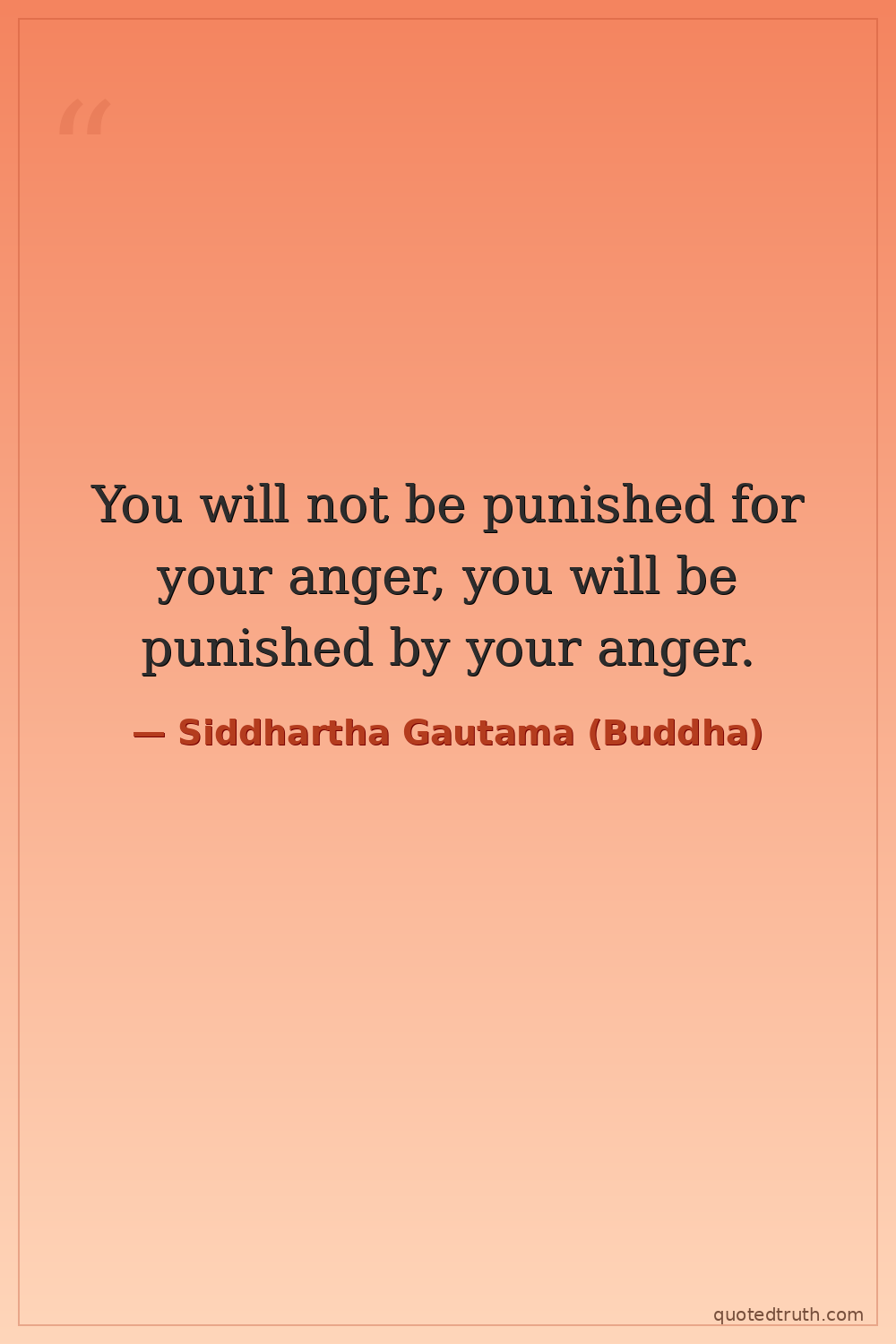
Siddhartha Gautama (Buddha) — "You will not be punished for your anger, you will be punished by your anger."
You will not be punished for your anger, you will be punished by your anger.
You will not be punished for your anger, you will be punished by your anger.
Click any product to generate a realistic preview. Up to 3 at a time.
* Initial load can take up to 90 seconds — revising the preview in another color is nearly instant.
"All experiences are preceded by mind, led by mind, made by mind."
"Holding on to anger is like grasping a hot coal with the intent of throwing it at someone else; you are the one who gets burned."
"You are what you think. All that you are arises from your thoughts. With your thoughts, you make your world."
"Do not believe anything simply because you have heard it. Do not believe in traditions because they have been handed down for many generations. Do not believe anything because it is spoken and rumored…"
"The greatest gift is to give people your enlightenment, to share it. It has to be the greatest."
Frequently attributed, but the exact phrasing is a modern popularization.
Date: c. 5th century BCE
GeneralFound in 2 providers: grok,gemini
2 sources checked
Anger itself is the punishment, not something that comes after it. When you hold onto rage, it damages your mind, body, and relationships in real time. No external judge or cosmic force needs to penalize you because the bitterness, stress, and clouded judgment anger creates are already inflicting the harm. The message reframes anger from a justified response into a self-inflicted wound you keep choosing to carry.
The Buddha taught that suffering originates in the mind through craving and aversion, with anger being a primary poison alongside greed and ignorance. After abandoning his princely life and achieving enlightenment under the Bodhi tree, he spent forty-five years teaching that liberation comes from mastering internal reactions rather than external circumstances. This saying distills his core insight that mental states create their own consequences, making meditation and mindful restraint essential practices on the Eightfold Path.
Siddhartha lived in 5th-6th century BCE northern India during the Axial Age, when urbanization and warring kingdoms displaced older Vedic rituals. Wandering ascetics and philosophers challenged Brahmin orthodoxy, debating karma, rebirth, and the nature of suffering. The rigid caste system and tribal vendettas made anger a socially destructive force. His teaching offered a radical psychological alternative: rather than appeasing gods or honoring blood feuds, individuals could end their own suffering through inner discipline.
AI-generated insights based on extensive research and information for context. Factual errors? Email [email protected].
Your cart is empty