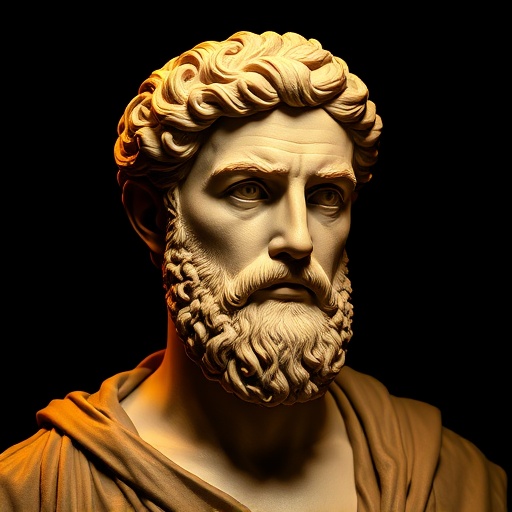
Pericles
Athenian statesman
Sayings by Pericles
Freedom is the sure possession of those alone who have the courage to defend it.
What you leave behind is not what is engraved in stone monuments, but what is woven into the lives of others.
Wait for that wisest of all counselors, Time.
Our constitution is called a democracy because power is in the hands not of a minority but of the whole people. When it is a question of settling private disputes, everyone is equal before the law; when it is a question of putting one person before another in positions of public responsibility, what counts is not membership of a particular class, but the actual ability which the man possesses.
We do not get into a state with our next-door neighbour if he enjoys himself in his own way, nor do we shoot him the kind of black looks which, though they do no real harm, still vex an honest man. We are free and open in our political life; in our private lives we are not suspicious of one another, and do not get angry with our neighbour for acting as he pleases, nor do we cast sour looks at him, which though harmless, are unpleasant.
We are lovers of the beautiful, yet with economy, and we cultivate the intellect without effeminacy. Wealth we employ rather for use than for show, and we set more store by a confession of poverty than by a vaunt of riches.
We alone regard a man who takes no interest in public affairs, not as a harmless, but as a useless character.
We throw open our city to the world, and never by alien acts exclude foreigners from any opportunity of learning or observing, although the eyes of an enemy may occasionally profit by our liberality; trusting less in system and policy than to the native spirit of our citizens.
For no country has ever yet been found that has proved equal to Athens in the hour of trial; and if our empire shall be overthrown, and we go down to defeat, our fall will be more glorious than that of any other state, for we shall have left to all after-ages an imperishable monument of our power.
For what you hold is, to speak somewhat plainly, a tyranny; to take it perhaps was wrong, but to let it go is unsafe.
Your empire is now like a tyranny: it may have been wrong to acquire it, but it is certainly dangerous to let it go.
For you are angry with me, who have no hand in the matter, and with yourselves too, if I may say so, for assenting to my counsels and sharing in my errors.
I am of the opinion that the individual who takes no part in public affairs is not to be regarded as a harmless, but as a useless character.
Just because you do not take an interest in politics doesn't mean politics won't take an interest in you!
A woman's greatest glory is to be little talked about by men, whether for good or ill.
Those who can think, but cannot express what they think, place themselves at the level of those who cannot think.
Having knowledge but lacking the power to express it clearly is no better than never having any ideas at all.
We do not say that a man who takes no interest in public affairs is a man who minds his own business. We say he has no business being here at all.
Mankind are tolerant of the praises of others so long as each hearer thinks that he can do as well or nearly as well himself, but, when the speaker rises above him, jealousy is aroused and he begins to be incredulous.
Future ages will wonder at us, as the present age wonders at us now.