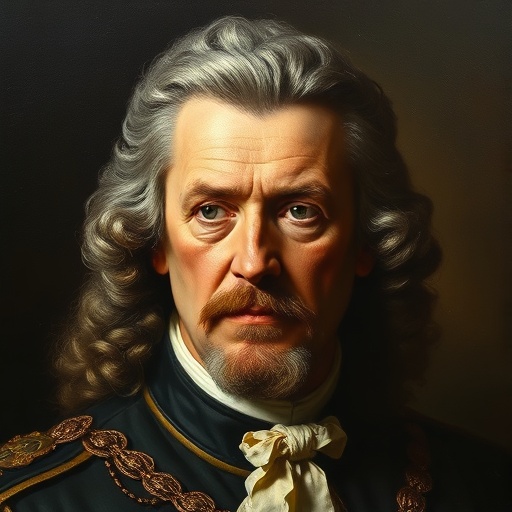
Frederick the Great

Prussian king

Early Modern influential 61 sayings

Sayings by Frederick the Great

My people and I have come to an agreement which satisfies us both. They are to say what they please, and I am to do what I please.

c. 1770s — Reported anecdote about his approach to governance and freedom of speech
Strange & Unusual Confirmed

An army is a good dog that barks when its master bids it.

c. 1750s-1780s — Likely from his military writings or correspondence
Strange & Unusual Unverifiable

If there is any glory in the world, it is in being a good citizen, a good brother, a good friend, and a good subject. The rest is all vanity.

c. 1740s-1780s — From his correspondence or philosophical writings
Strange & Unusual Unverifiable

A man who is too sensitive to the world and too much given to reflection will find it hard to endure the slings and arrows of misfortune.

c. 1740s-1780s — From his philosophical writings, likely 'Anti-Machiavel' or 'Letters to his friends'
Strange & Unusual Unverifiable

The greatest and noblest pleasure which men can have in this world is to discover new truths; and the next is to shake off old prejudices.

c. 1740s-1780s — From his philosophical writings
Strange & Unusual Confirmed

I am not afraid of the enemy, but of my own people.

c. 1750s-1780s — Attributed, reflecting concerns about internal dissent or betrayal
Strange & Unusual Unverifiable

Old age is a tyrant, who forbids, upon pain of death, all the pleasures of youth.

c. 1770s — From his correspondence or reflections on life
Strange & Unusual Unverifiable

It is pardonable to be defeated, but never to be surprised.

c. 1750s — From his military maxims or letters to generals
Strange & Unusual Unverifiable

A crown is merely a hat that lets the rain in.

c. 1740s-1780s — Attributed, expressing a cynical view of kingship
Strange & Unusual Confirmed

Religion is a matter for the individual conscience, and I will not interfere with it.

c. 1740s — Reflecting his policy of religious tolerance, particularly in his early reign
Strange & Unusual Unverifiable

I am only the first servant of the state.

c. 1740s — From his political writings or public statements, defining his role
Strange & Unusual Unverifiable

War is the natural state of mankind.

c. 1750s-1780s — From his military philosophy or writings
Strange & Unusual Unverifiable

One must be a fox and a lion.

1739 — From 'Anti-Machiavel', echoing Machiavelli but with his own interpretation
Strange & Unusual Unverifiable

As for the Jews, they are the most dangerous and cunning people in the world.

c. 1760s — From his correspondence, reflecting contemporary anti-Semitic views, though his policies were someti…
Strange & Unusual Unverifiable

A government must be just, vigilant, and economical.

c. 1740s-1780s — From his political philosophy or writings on governance
Strange & Unusual Unverifiable

The musket is the queen of weapons.

c. 1750s — From his military writings, emphasizing the importance of infantry
Strange & Unusual Unverifiable

You must be a philosopher, for a prince who does not think is a prince who does not rule.

c. 1730s-1740s — From his advice to a young prince or from 'Anti-Machiavel'
Strange & Unusual Unverifiable

My heart belongs to my friends, but my life to the State.

c. 1750s-1780s — From his personal letters or reflections
Strange & Unusual Unverifiable

The greatest error of all is to do nothing because you can only do a little. Do what you can.

c. 1760s-1780s — From his advice or philosophical reflections
Strange & Unusual Unverifiable

A man without a cause is a man without a country.

c. 1750s-1780s — Attributed, reflecting his emphasis on duty and purpose
Strange & Unusual Unverifiable