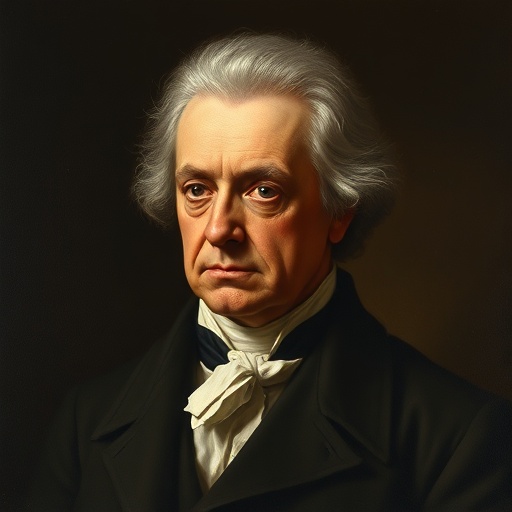
Immanuel Kant
Critique of Pure Reason
Sayings by Immanuel Kant
The fact that the beautiful is the symbol of the morally good, and that it is only in this respect that it gives us pleasure with a claim to the agreement of everyone, is a point of which everyone would be conscious, if he had reflected on it.
All men are therefore equal, not in the sense that they are all alike, but in the sense that they all have the same rights and duties.
Man is an animal that needs a master.
The greatest problem for the human species, the solution of which nature compels it to seek, is the achievement of a universal civic society which administers law.
Out of the crooked timber of humanity, no straight thing was ever made.
Enlightenment is man's emergence from his self-imposed immaturity.
Act only according to that maxim whereby you can at the same time will that it should become a universal law without contradiction.
Treat humanity, whether in your own person or in the person of any other, always at the same time as an end, never merely as a means.
Two things fill the mind with ever new and increasing admiration and awe, the more often and more steadily one reflects on them: the starry heavens above me and the moral law within me.
The greatest human perfection is to perform one's duty.
Morality is not properly the doctrine of how we may make ourselves happy, but how we may make ourselves worthy of happiness.
The only thing that is good without qualification is a good will.
Duty is the necessity of acting from respect for the law.
The moral law is therefore the sole principle of determination of the pure will.
Reason is the faculty which provides the principles of knowledge a priori.
Thoughts without content are empty, intuitions without concepts are blind.
The understanding can intuit nothing, the senses can think nothing. Only through their union can knowledge arise.
Experience is the product of the understanding applying its concepts to sensory data.
The categories are the conditions of the possibility of experience.
Space and time are not properties of things in themselves, but forms of our intuition.