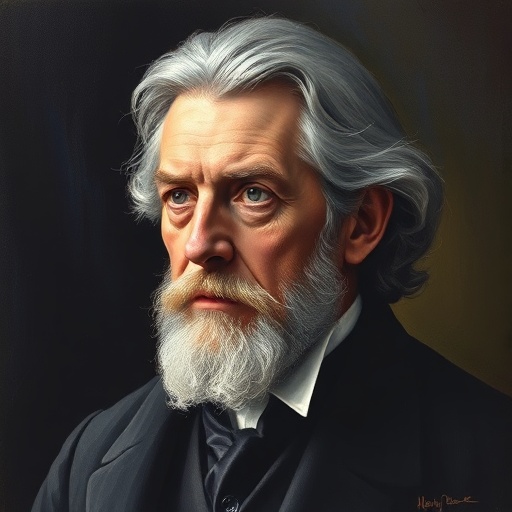
Georg Wilhelm Friedrich Hegel

Dialectical philosophy

Modern influential 81 sayings

Sayings by Georg Wilhelm Friedrich Hegel

The history of the world is none other than the progress of the consciousness of freedom.

1837 (posthumous) — Lectures on the Philosophy of History, Introduction
Strange & Unusual Unverifiable

What is rational is actual and what is actual is rational.

1821 — Elements of the Philosophy of Right, Preface
Strange & Unusual Unverifiable

Spirit is the only reality.

1807 — Phenomenology of Spirit, Preface
Strange & Unusual Unverifiable

Truth is the whole.

1807 — Phenomenology of Spirit, Preface
Strange & Unusual Unverifiable

The owl of Minerva spreads its wings only with the falling of the dusk.

1821 — Elements of the Philosophy of Right, Preface
Strange & Unusual Unverifiable

The State is the actuality of the ethical Idea.

1821 — Elements of the Philosophy of Right, Part 3, Section 3, Paragraph 257
Strange & Unusual Unverifiable

Scepticism is the freedom which thought achieves in itself.

1833-1836 (posthumous) — Lectures on the History of Philosophy, Volume 3
Strange & Unusual Unverifiable

To be independent of the world is the only means of enjoying it.

1800 — Letter to Schelling, November 2, 1800
Strange & Unusual Unverifiable

The individual, for as much as he is a particular, is a natural being.

1821 — Elements of the Philosophy of Right, Part 3, Section 1, Paragraph 182
Strange & Unusual Unverifiable

The famous principle, 'Know thyself,' is not merely an exhortation to self-knowledge, but also, and more fundamentally, a demand for knowledge of the nature of Spirit.

1832 (posthumous) — Lectures on the Philosophy of Religion, Part 3, Section 3, Chapter 2
Strange & Unusual Unverifiable

The State is the divine idea as it exists on earth.

1837 (posthumous) — Lectures on the Philosophy of History, Part 3, Section 3, Chapter 1
Strange & Unusual Unverifiable

The only Thought which Philosophy brings with it to the contemplation of History, is the simple conception of Reason; that Reason is the sovereign of the world; that the history of the world, therefore, presents us with a rational process.

1837 (posthumous) — Lectures on the Philosophy of History, Introduction
Strange & Unusual Unverifiable

The history of the world is not the theatre of happiness. Periods of happiness are blank pages in it.

1837 (posthumous) — Lectures on the Philosophy of History, Introduction
Strange & Unusual Unverifiable

The Absolute is Spirit.

1807 — Phenomenology of Spirit, Preface
Strange & Unusual Unverifiable

The true is the bacchanalian revel in which no member is not drunk; and because every member as soon as it detaches itself, dissolves immediately—the revel is just as much transparent and simple repose.

1807 — Phenomenology of Spirit, Preface
Strange & Unusual Unverifiable

The development of the world is the development of the idea of freedom.

1837 (posthumous) — Lectures on the Philosophy of History, Introduction
Strange & Unusual Unverifiable

The finite is the non-existent.

1812-1816 — Science of Logic, Book 1, Section 1, Chapter 2
Strange & Unusual Unverifiable

Religion is the self-consciousness of God.

1832 (posthumous) — Lectures on the Philosophy of Religion, Introduction
Strange & Unusual Unverifiable

The State is the march of God through the world.

1821 — Elements of the Philosophy of Right, Appendix, Additions to Paragraph 258
Strange & Unusual Unverifiable

The beautiful is the sensible appearance of the Idea.

1835 (posthumous) — Lectures on Aesthetics, Introduction
Strange & Unusual Unverifiable