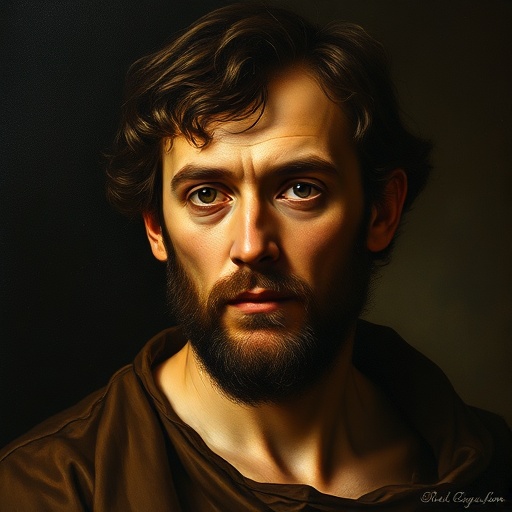
Caravaggio

Baroque painter

Early Modern influential 38 sayings

Sayings by Caravaggio

The greatest joy for me is to work. I have no other pleasure.

c. 1619-1621 (Mancini's writing, referring to Caravaggio's life) — Reported by Giulio Mancini in 'Considerazioni sulla pittura'
Strange & Unusual Unverifiable

I will paint the face of a beggar as well as that of an emperor.

Uncertain, early 17th century — Attributed, reflecting his artistic philosophy
Strange & Unusual Unverifiable

All work is good work if it is well done.

Uncertain, early 17th century — Attributed, reflecting his artistic philosophy
Strange & Unusual Unverifiable

I have never chosen a subject from the antique, but always from nature.

c. 1600-1606 (Baglione's writing about Caravaggio's practice) — Reported by Giovanni Baglione in 'Le Vite de' Pittori, Scultori et Architetti'
Strange & Unusual Unverifiable

I know nothing about painting, but I know how to paint.

Uncertain, early 17th century — Attributed, reflecting his pragmatic approach
Strange & Unusual Unverifiable

I see a broom and a bottle, and I paint them.

Uncertain, early 17th century — Attributed, emphasizing his focus on realism
Strange & Unusual Unverifiable

I have no master but nature.

Uncertain, early 17th century — Attributed, reflecting his independent spirit
Strange & Unusual Unverifiable

He said that he did not believe in ancient masters, nor in any other master, but only in nature.

c. 1672 (Bellori's writing about Caravaggio's statements) — Reported by Giovanni Pietro Bellori in 'Le Vite de' Pittori, Scultori et Architetti Moderni'
Strange & Unusual Unverifiable

I am a painter by nature, not by art.

Uncertain, early 17th century — Attributed, emphasizing his innate talent
Strange & Unusual Unverifiable

I do not wish to be judged by what others have done, but by what I myself do.

Uncertain, early 17th century — Attributed, reflecting his originality
Strange & Unusual Unverifiable

One must paint what one sees, not what one imagines.

Uncertain, early 17th century — Attributed, emphasizing his commitment to realism
Strange & Unusual Unverifiable

I have no fear of death, for I have lived.

Uncertain, early 17th century — Attributed, perhaps apocryphal, reflecting a dramatic personality
Strange & Unusual Unverifiable

He would not make so much as a single brushstroke without having the model before him.

c. 1672 (Bellori's writing about Caravaggio's practice) — Reported by Giovanni Pietro Bellori in 'Le Vite de' Pittori, Scultori et Architetti Moderni'
Strange & Unusual Unverifiable

He used to say that painting from life was the true and best way of painting.

c. 1619-1621 (Mancini's writing, referring to Caravaggio's practice) — Reported by Giulio Mancini in 'Considerazioni sulla pittura'
Strange & Unusual Unverifiable

I am a man of the world, and I paint what I see in the world.

Uncertain, early 17th century — Attributed, reflecting his engagement with everyday life
Strange & Unusual Unverifiable

I do not care for beauty, but for truth.

Uncertain, early 17th century — Attributed, emphasizing his focus on realism over idealized forms
Strange & Unusual Unverifiable

He was always ready to pick a quarrel or engage in a fight.

c. 1619-1621 — Reported by Giulio Mancini in 'Considerazioni sulla pittura' (describing Caravaggio's character)
Strange & Unusual Unverifiable

He was a very contentious man, and always had a sword at his side.

c. 1642 — Reported by Giovanni Baglione in 'Le Vite de' Pittori, Scultori et Architetti' (describing Caravaggi…
Strange & Unusual Unverifiable

He would not let a day pass without sketching some figure from life.

c. 1672 — Reported by Giovanni Pietro Bellori in 'Le Vite de' Pittori, Scultori et Architetti Moderni' (descri…
Strange & Unusual Unverifiable

I have no respect for those who paint without having seen.

Uncertain, early 17th century — Attributed, emphasizing the importance of direct observation
Strange & Unusual Unverifiable