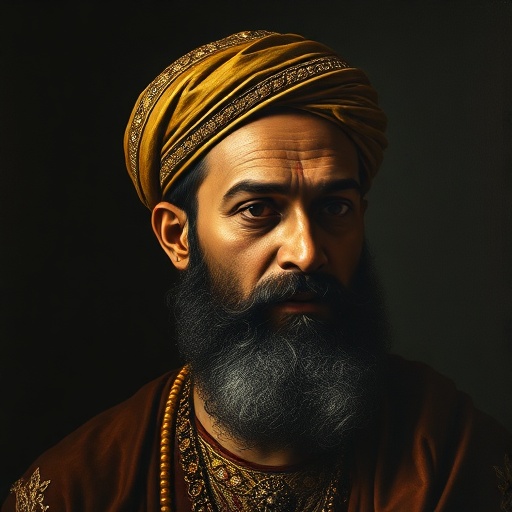
Portrait of Akbar the Great

Akbar the Great

Mughal Emperor, religious tolerance

Early Modern influential 15 sayings

Sayings by Akbar the Great

It cannot be wisdom to assert the truth of one faith over another. In our troubled world so full of contradictions, the wise person makes justice his guide and learns from all.

16th century (approx. 1556-1605) — A statement reflecting his philosophy of religious tolerance and universalism.
Biblical Unverifiable

It cannot be wisdom to assert the truth of one faith over another. In our troubled world so full of contradictions, the wise person makes justice his guide and learns from all.

16th century (approx. 1556-1605) — A statement reflecting his philosophy of religious tolerance and universalism.
Biblical Disputed

Drop the sword - for there is but one flesh to wound, and it is the one flesh of all humankind.

16th century (approx. 1556-1605) — A statement advocating for peace and human unity.
War & Conflict Unverifiable

Drop the sword - for there is but one flesh to wound, and it is the one flesh of all humankind.

16th century (approx. 1556-1605) — A statement advocating for peace and human unity.
War & Conflict Disputed

Life's burdens are lighter when I laugh at myself.

16th century (approx. 1556-1605) — A personal reflection on self-humor.
Wisdom Unverifiable

Life's burdens are lighter when I laugh at myself.

16th century (approx. 1556-1605) — A personal reflection on self-humor.
Wisdom Disputed

The vulgar believe in miracles, but the wise man accepts nothing without adequate proof.

16th century (approx. 1556-1605) — A statement on skepticism and the pursuit of proof.
Biblical Unverifiable

The vulgar believe in miracles, but the wise man accepts nothing without adequate proof.

16th century (approx. 1556-1605) — A statement on skepticism and the pursuit of proof.
Biblical Disputed

Most worshippers of God are intent on the advancement of their own desires, not on His worship.

16th century (approx. 1556-1605) — A critical observation on religious motivations.
Biblical Unverifiable

Most worshippers of God are intent on the advancement of their own desires, not on His worship.

16th century (approx. 1556-1605) — A critical observation on religious motivations.
Biblical Disputed

A monarch should ever be intent on conquest, otherwise his neighbors rise in arms against him.

Late 16th century — Advice to his son, Prince Salim (later Jahangir)
Wisdom Unverifiable

Why should I persecute those who are equally the creatures of God?

Late 16th century — On religious tolerance
Art & Creativity Unverifiable

The wisdom of the learned is like a deep well, but the wisdom of the common people is like a running stream.

Late 16th century — On governance and wisdom
Educational Unverifiable

I have seen many men with long beards and little brains.

Late 16th century — On judging people by appearances
Nature & World Unverifiable

Four things are necessary for a king: (1) a good spy system, (2) plenty of money, (3) a well-equipped army, and (4) wise counselors.

Late 16th century — On kingship
War & Conflict Unverifiable

A man should not be judged by his faith but by his actions.

Late 16th century — On religious tolerance
Biblical Unverifiable

If I were not a king, I would be a fakir.

Late 16th century — Reflecting on simplicity
Wisdom Unverifiable

The sword of justice has no sheath.

Late 16th century — On ruling fairly
War & Conflict Unverifiable

A kingdom can be conquered on horseback, but it cannot be ruled from horseback.

Late 16th century — On governance
War & Conflict Unverifiable

The best way to keep a secret is to pretend there isn’t one.

Late 16th century — On statecraft
Wisdom Unverifiable
Your Cart

Your cart is empty