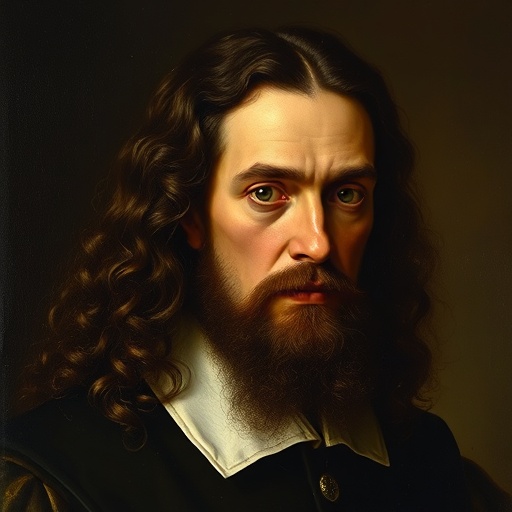
Baruch Spinoza
Rationalist philosophy
Sayings by Baruch Spinoza
All things excellent are as difficult as they are rare.
He who is led by fear and does good to avoid evil, is not guided by reason.
The highest good of the mind is the knowledge of God, and the highest virtue of the mind is to know God.
I call a thing free which exists and acts by the sole necessity of its own nature; and I call that compelled which is determined by something else to exist and act in a fixed and determinate manner.
Men are deceived if they think themselves free, a belief that consists only in this, that they are conscious of their actions and ignorant of the causes by which they are determined.
The greater the emotion, the more strongly are we affected by it.
A free man thinks of death least of all things; and his wisdom is a meditation not of death but of life.
I have striven not to laugh at human actions, not to weep at them, nor to hate them, but to understand them.
Nature has no end in view, and all final causes are nothing but human figments.
The order and connection of ideas is the same as the order and connection of things.
Peace is not an absence of war, it is a virtue, a state of mind, a disposition for benevolence, confidence, justice.
The mind's highest good is the knowledge of God, and the mind's highest virtue is to know God.
He who wishes to revenge injuries by retaliating them, will live in a circle of hatred.
The intellectual love of God is the very love of God with which God loves himself, not insofar as he is infinite, but insofar as he can be explicated through the human mind's essence, considered under the form of eternity.
Every man exists by the highest right of nature, and consequently, by the highest natural right, he does whatever follows from the necessity of his own nature.
The highest good of those who follow virtue is common to all, and all can equally participate in it.
The knowledge of eternal and infinite being is necessarily true.
Whatsoever is, is in God, and without God nothing can be or be conceived.
The human mind has a knowledge of God, and knows that it is in God, and is conceived through God.
The world would be much more happy if men were to govern their passions by reason, than if they were to leave them unbridled.