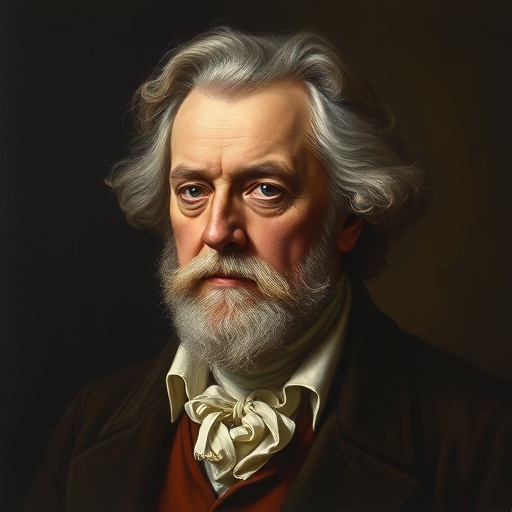
David Hume
Empiricism, skepticism
Sayings by David Hume
The greater part of mankind are more governed by interest than by reason.
Reason is, and ought only to be the slave of the passions, and can never pretend to any other office than to serve and obey them.
Generally speaking, the errors in religion are dangerous; those in philosophy only ridiculous.
All knowledge degenerates into probability.
When we run over libraries, persuaded of these principles, what havoc must we make? If we take in our hand any volume; of divinity or school metaphysics, for instance; let us ask, Does it contain any abstract reasoning concerning quantity or number? No. Does it contain any experimental reasoning concerning matter of fact and existence? No. Commit it then to the flames: For it can contain nothing but sophistry and illusion.
No testimony is sufficient to establish a miracle, unless the testimony be of such a kind, that its falsehood would be more miraculous, than the fact, which it endeavours to establish.
Custom, then, is the great guide of human life.
The corruption of the best things produces the worst.
It is not reason which is the guide of life, but custom.
Nothing is more apt to surprise us than the extreme poverty of opinion, which prevails in this country, with regard to questions of morals, politics, and religion.
Beauty is no quality in things themselves: It exists merely in the mind which contemplates them; and each mind perceives a different beauty.
I am sensible, that, in order to make a man a good cavaller, 'tis not sufficient to teach him to ride; he must have a good horse.
The imagination is the most lordly faculty of the soul.
It is not contrary to reason to prefer the destruction of the whole world to the scratching of my finger.
The chief cause of human error is to be found in the prejudice of the imagination.
A passion is an original existence, or, if you will, modification of existence, and contains not any representative quality, which renders it a copy of any other existence or modification.
The fact is, that the greatest part of our reasonings, concerning matters of fact, are founded on the relation of cause and effect.
The truth is, all politicians have an interest in the perpetuity of the forms of government, and none in the perpetuity of their substance.
The identity, which we ascribe to the mind of man, is only a fictitious one.
Our judgements concerning moral distinctions are derived from the moral sentiment, and not from reason.