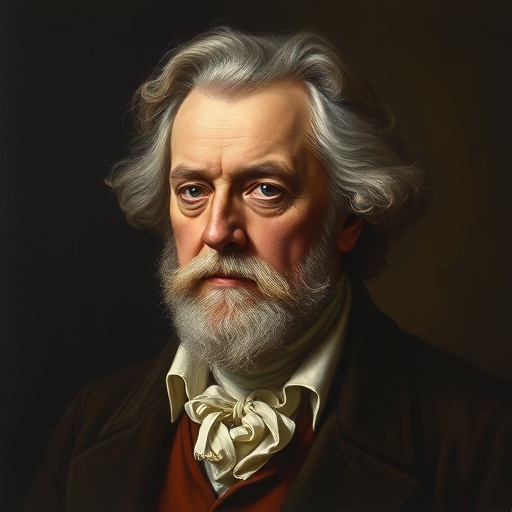
David Hume
Empiricism, skepticism
Sayings by David Hume
A man who is temperate in everything is a man who is not interested in anything.
The elegant part of mankind, who are not addicted to the severer sciences, may here find entertainment, and perhaps instruction.
There is nothing in itself valuable or despicable, desirable or hateful, but as it acquires these attributes from the mind of the person who surveys it.
The good of mankind is the only object of moral consideration.
All our ideas are nothing but copies of our impressions, or, in other words, that it is impossible for us to think of anything, which we have not antecedently felt, either by our external or internal senses.
The greatest part of mankind are governed by authority, not by reason.
It is an infallible maxim, that no man was ever attached to the present order of things, who did not hope to profit by it.
The humour of the populace, in matters of religion, is a most curious subject of speculation.
Liberty of the press is a blessing when we are inclined to write against others, and a calamity when we find others writing against us.
I am sensible that my philosophy is very little susceptible of the ornaments of eloquence and poetry.
I may venture to affirm, that there is nothing in itself more surprising than the easiness with which the many are governed by the few; and the implicit submission, with which men resign their own sentiments and passions to those of their rulers.
The greatest crime is to be poor.
The greater the difficulty, the greater the glory.
The wise man proportions his belief to the evidence.
A propensity to laugh is at the bottom of all our serious philosophical enquiries.
The most perfect philosophy of the natural kind only staves off our ignorance a little longer.
Mankind are so much the same, in all times and places, that history informs us of nothing new or strange in this particular.
What a peculiar privilege has this little agitation of the brain which we call thought!
I am apt to suspect the Negroes to be naturally inferior to the Whites. There scarcely ever was a civilized nation of that complexion, nor even any individual eminent either in action or speculation. No ingenious manufactures amongst them, no arts, no sciences.
The greatest part of mankind are naturally stupid and ignorant, and consequently owe their submission to the magistrate by the force of custom and education, more than from any sense of their duty or obligation.