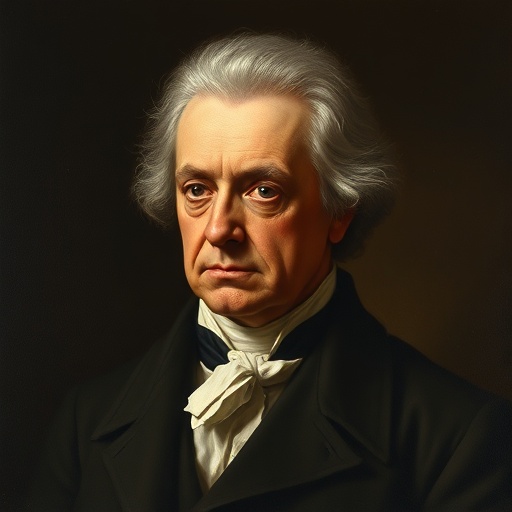
Portrait of Immanuel Kant

Immanuel Kant

Critique of Pure Reason

Early Modern influential 83 sayings

Sayings by Immanuel Kant

The concept of freedom is the keystone of the whole edifice of a system of pure reason.

1788 — Critique of Practical Reason, Preface
General Unverifiable

The existence of God, freedom, and immortality are postulates of practical reason.

1788 — Critique of Practical Reason, Book II, Chapter 5
General Confirmed

Live your life as though your every act were to become a universal law.

1785 — A simplified version of the Categorical Imperative from 'Groundwork of the Metaphysics of Morals'. T…
Life & Aging Unverifiable

All our knowledge begins with the senses, proceeds then to the understanding, and ends with reason. There is nothing higher than reason.

1781 — From 'Critique of Pure Reason'. The absolute declaration can be seen as unintentionally comedic in i…
General Unverifiable

Experience without theory is blind, but theory without experience is mere intellectual play.

1781 — From 'Critique of Pure Reason'. A concise and witty summary of his epistemological stance.
General Unverifiable

Man is an animal that, so long as he lives among other animals of his species, needs a master.

1784 — From 'Idea for a Universal History with a Cosmopolitan Purpose'. A rather cynical, almost darkly hum…
General Unverifiable

Dare to know! (Sapere aude.) 'Have courage to use your own understanding!'—that is the motto of enlightenment.

1784 — From 'What is Enlightenment?'. The imperative nature, while serious, has a punchy, almost comically …
Life & Aging Confirmed

Happiness is not an ideal of reason but of imagination.

1785 — From 'Groundwork of the Metaphysics of Morals'. A rather dry, witty observation on the elusive natur…
General Unverifiable

The greatest human endeavor is the striving for a good character.

1780s (approximate) — Attributed saying.
Food & Drink Unverifiable

Science is organized knowledge. Wisdom is organized life.

1780s (approximate) — Attributed saying. A neat, aphoristic distinction.
General Unverifiable

Act in such a way that you treat humanity, whether in your own person or in the person of any other, never simply as a means, but always at the same time as an end.

1785 — One formulation of the Categorical Imperative from 'Groundwork of the Metaphysics of Morals'. Its de…
Food & Drink Unverifiable

The Negroes of Africa have by nature no feeling that rises above the trifling.

1764 — From "Observations on the Feeling of the Beautiful and Sublime"
General Confirmed

Humanity is at its greatest perfection in the race of the whites.

1775 — From "Of the Different Human Races"
Social & Racial Unverifiable

The Jews still cannot claim any true genius, any truly great man.

1798 — From "Anthropology from a Pragmatic Point of View"
General Unverifiable

Women will avoid the wicked not because it is unright, but because it is ugly.

1764 — From "Observations on the Feeling of the Beautiful and Sublime"
General Unverifiable

The Hindus always stay children and do not reach the maturity of judgment.

1790 — From "Lectures on Anthropology"
General Unverifiable

A woman is embarrassed little that she does not possess high insights... her beauty compensates for everything.

1764 — From "Observations on the Feeling of the Beautiful and Sublime"
General Unverifiable

The American Indians are too weak for hard labor, too indifferent for industry, and incapable of any culture.

1802 — From "Physical Geography"
General Unverifiable

The Chinese are a race of liars.

1790 — From "Lectures on Anthropology"
Social & Racial Unverifiable

The Jews are a nation of cheaters.

1798 — From "Anthropology from a Pragmatic Point of View"
General Unverifiable
Your Cart

Your cart is empty