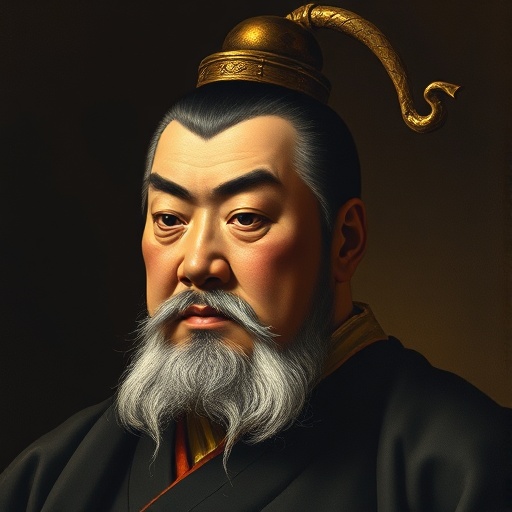
Portrait of Tokugawa Ieyasu

Tokugawa Ieyasu

Unified Japan, Tokugawa shogunate

Early Modern influential 87 sayings

Sayings by Tokugawa Ieyasu

Give the peasants neither life nor death.

17th century (approx. 1603-1616) — A principle of governance regarding the peasantry, implying control through limited prosperity.
Life & Death Unverifiable

Give the peasants neither life nor death.

17th century (approx. 1603-1616) — A principle of governance regarding the peasantry, implying control through limited prosperity.
Life & Death Disputed

Little Bird if you do not sing for me, I will wait for you.

17th century (approx. 1603-1616) — Part of a famous anecdote contrasting his patience with Oda Nobunaga's and Toyotomi Hideyoshi's appr…
Wisdom Unverifiable

Little Bird if you do not sing for me, I will wait for you.

17th century (approx. 1603-1616) — Part of a famous anecdote contrasting his patience with Oda Nobunaga's and Toyotomi Hideyoshi's appr…
Wisdom Disputed

Persuade thyself that imperfection and inconvenience are the natural lot of mortals, and there will be no room for discontent, neither for despair.

17th century (approx. 1603-1616) — A philosophical maxim on accepting life's hardships.
Life & Death Unverifiable

Persuade thyself that imperfection and inconvenience are the natural lot of mortals, and there will be no room for discontent, neither for despair.

17th century (approx. 1603-1616) — A philosophical maxim on accepting life's hardships.
Life & Death Confirmed

If the lack of freedom is considered normal, there will be no complaints.

17th century (approx. 1603-1616) — A cynical observation on human adaptability to control.
Justice & Rights Unverifiable

If the lack of freedom is considered normal, there will be no complaints.

17th century (approx. 1603-1616) — A cynical observation on human adaptability to control.
Justice & Rights Disputed

When ambition ends, happiness begins.

1616 — Reflecting on his retirement
Wisdom Unverifiable

Patience means restraining one’s inclinations.

Early 17th century — On self-control
Nature & World Unverifiable

The strong manly ones in life are those who understand the meaning of the word patience.

Early 17th century — On resilience
Power & Leadership Unverifiable

Life is like walking along a long road with a heavy load on your shoulders.

Early 17th century — Reflecting on hardship
Power & Leadership Unverifiable

First secure the rice, then add the seasonings.

Early 17th century — On prioritizing essentials
Wisdom Unverifiable

The strong eat the weak. That is the law of nature.

Late 16th - early 17th century — Attributed saying, reflecting his pragmatic and ruthless approach to power.
General Unverifiable

Life is like walking a long road with a heavy pack. One must never hurry.

Early 17th century — A philosophical saying attributed to him, often interpreted as advice for patience and endurance in …
General Unverifiable

He who knows how to conquer, knows also how to yield.

Early 17th century — A strategic observation attributed to him, suggesting flexibility in warfare and politics.
General Unverifiable

The world is full of people who are good at talking but bad at doing.

Early 17th century — A cynical observation attributed to him, reflecting his focus on action over words.
General Unverifiable

A man's life is but a fleeting dream.

Early 17th century — A philosophical reflection on the transience of life, attributed to him.
General Unverifiable

To be victorious, one must first learn to lose.

Early 17th century — A strategic paradox attributed to him, emphasizing the importance of learning from defeat.
General Unverifiable

When you have power, you have enemies.

Early 17th century — A pragmatic observation on the nature of power, attributed to him.
General Unverifiable
Your Cart

Your cart is empty