What it means
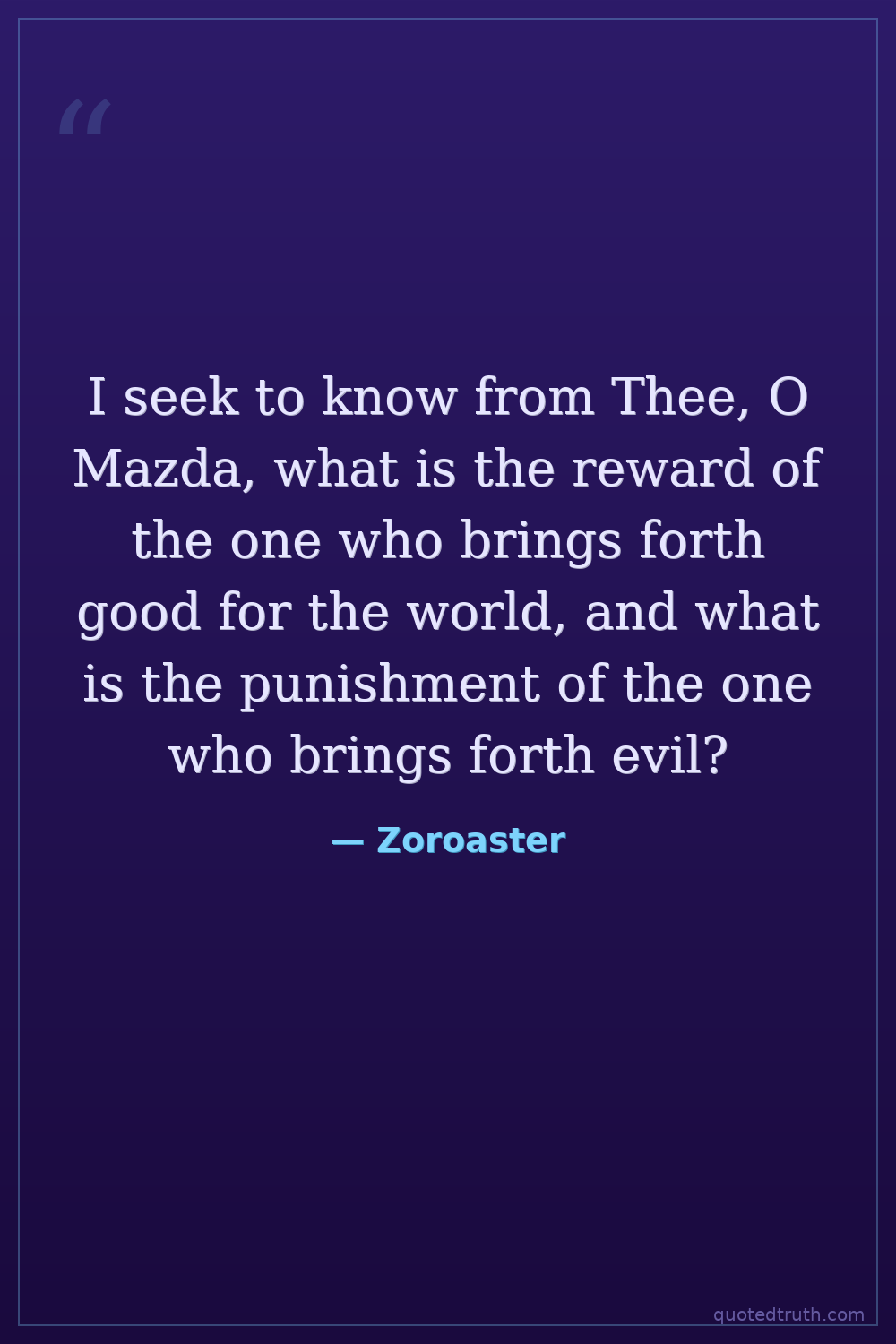
The speaker is directly asking God what happens to people based on their actions. Those who do good and help others—what do they receive? Those who cause harm—what consequences await them? It's a fundamental question about moral accountability: does the universe actually track whether you help or hurt, and are there real outcomes tied to those choices, or does behavior go unanswered?
Relevance to Zoroaster
Zoroaster built his entire religion around exactly this question. He taught that every person chooses between Asha (truth, good) and Druj (lie, evil), and that each soul faces judgment at the Chinvat Bridge after death. As a reforming priest who rejected the ritualistic polytheism of his time, he prioritized ethical choice over sacrifice, making personal moral accountability the core of his theology.
The era
Zoroaster lived in ancient Persia, likely between 1500-1000 BCE, when religion centered on animal sacrifice, warrior gods, and tribal raiding. Ethics were communal and transactional rather than individual. His insistence that a single supreme God cared about personal moral conduct—and that ordinary people would be judged for their choices—was radical. It introduced concepts of heaven, hell, and final judgment that later shaped Judaism, Christianity, and Islam.
AI-generated insights based on extensive research and information for context. Factual errors? Email [email protected].