What it means
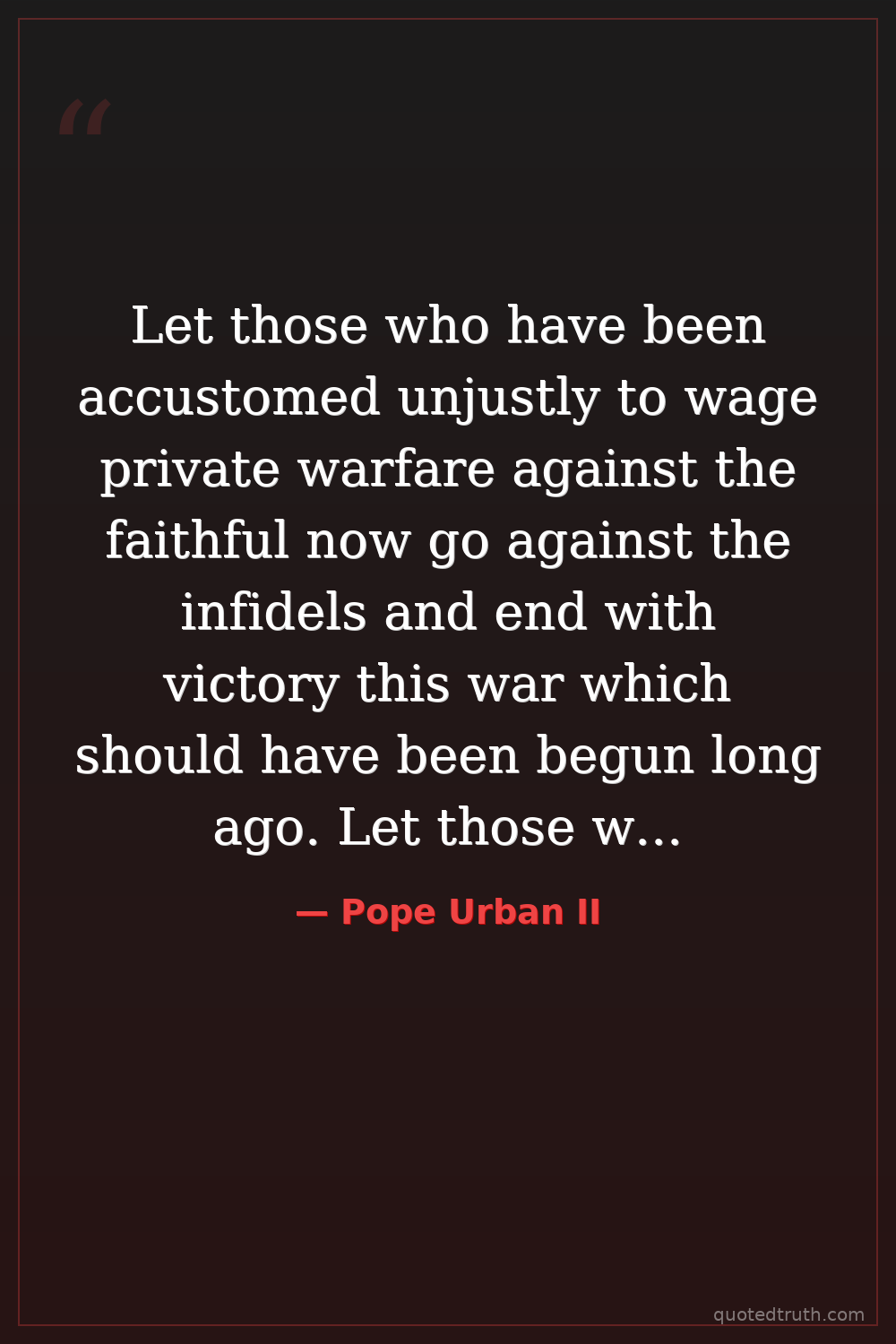
Men habituated to feudal violence are urged to redirect their aggression toward a holy war rather than fighting fellow Christians in private vendettas. Urban reframes robbery and lawlessness as morally redeemable — the violence isn't condemned, just redirected toward a sacred cause. Joining the Crusade offers transformation: a robber becomes a legitimate knight, and a sinner earns spiritual salvation through righteous combat.
Relevance to Pope Urban II
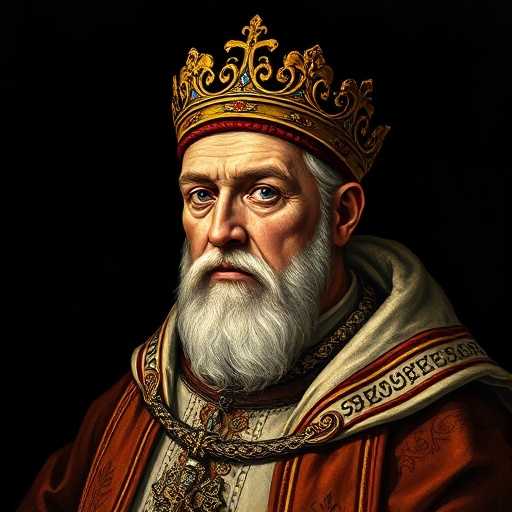
Urban II devoted his pontificate to curbing intra-Christian violence through the Peace of God movement, which banned warfare on holy days and protected civilians. His Clermont sermon in November 1095 was a masterstroke: rather than suppressing violent knights, he weaponized them for a papal cause. As a reform-minded Cluniac monk turned pope, he saw the Crusade as both spiritual renewal and a route to reuniting Eastern and Western Christianity under Rome's authority.
The era
In 1095, feudal Europe was consumed by private warfare — landless knights raiding neighbors and devastating peasant communities. The Peace and Truce of God movements had only partially contained this violence. Seljuk Turks had overrun Byzantine Anatolia after Manzikert (1071) and held Jerusalem. Emperor Alexios I appealed to Rome for military aid. Urban's speech redirected Europe's surplus of aggressive, landless warriors into a papally-authorized campaign promising indulgences and eternal salvation.
AI-generated insights based on extensive research and information for context. Factual errors? Email [email protected].