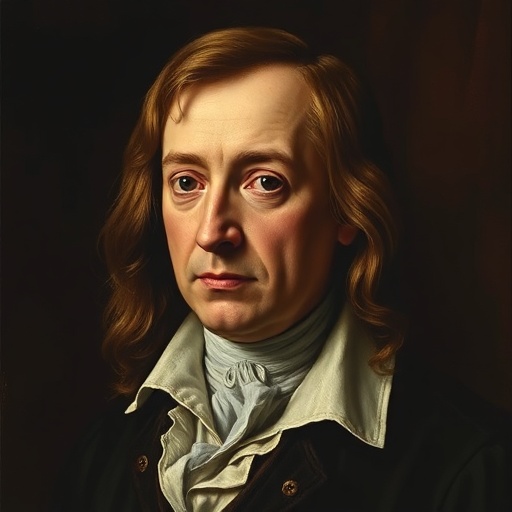
John Milton — "For what is worth in anything, But so much money as 'twill bring?"
For what is worth in anything, But so much money as 'twill bring?
For what is worth in anything, But so much money as 'twill bring?
Click any product to generate a realistic preview. Up to 3 at a time.
* Initial load can take up to 90 seconds — revising the preview in another color is nearly instant.
"For God, we know, hath bid the man to rule: But in that right, not with a tyrannous hand."
"They also serve who only stand and wait."
"Nor love thy life, nor hate; but what thou liv'st Live well, how long or short permit to heaven."
"The childhood shows the man, as morning shows the day."
"Evil communication corrupts good manners."
English poet whose Paradise Lost (1667) is the canonical English epic, written while blind during the Restoration after his service to Cromwell's Commonwealth. Closely associated with Andrew Marvell (Commonwealth poet and friend who protected Milton at the Restoration). For an intellectual contrast, see King Charles II's Restoration court, the courtly, sexually-libertine, theater-reopened world of 1660s London — Milton wrote Paradise Lost as a defeated Republican; the Restoration culture around him celebrated everything his Commonwealth had banned. The cleanest 'losing side writes the masterpiece' moment in English literature — Paradise Lost's Satan is freighted with the political defeat of the regicides Milton served.
Paradise Lost (often misattributed or misremembered, actual quote is different in Paradise Lost, but the sentiment exists in other works, though this exact phrasing is not found in his major works. This seems to be a common misattribution, or a paraphrase of a more complex idea.)
Date: 1667 (approx)
Money & BusinessFound in 1 providers: grok
1 source checked
Your cart is empty