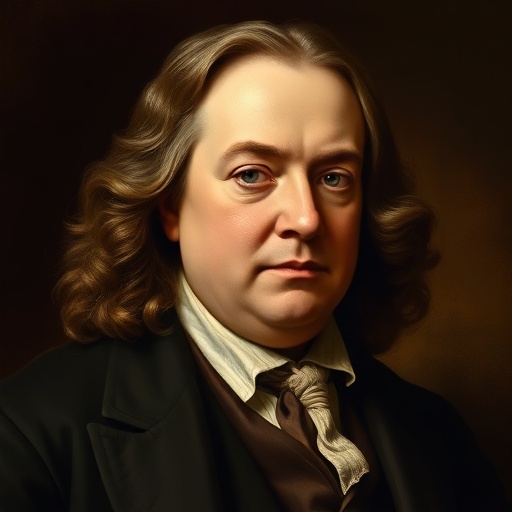
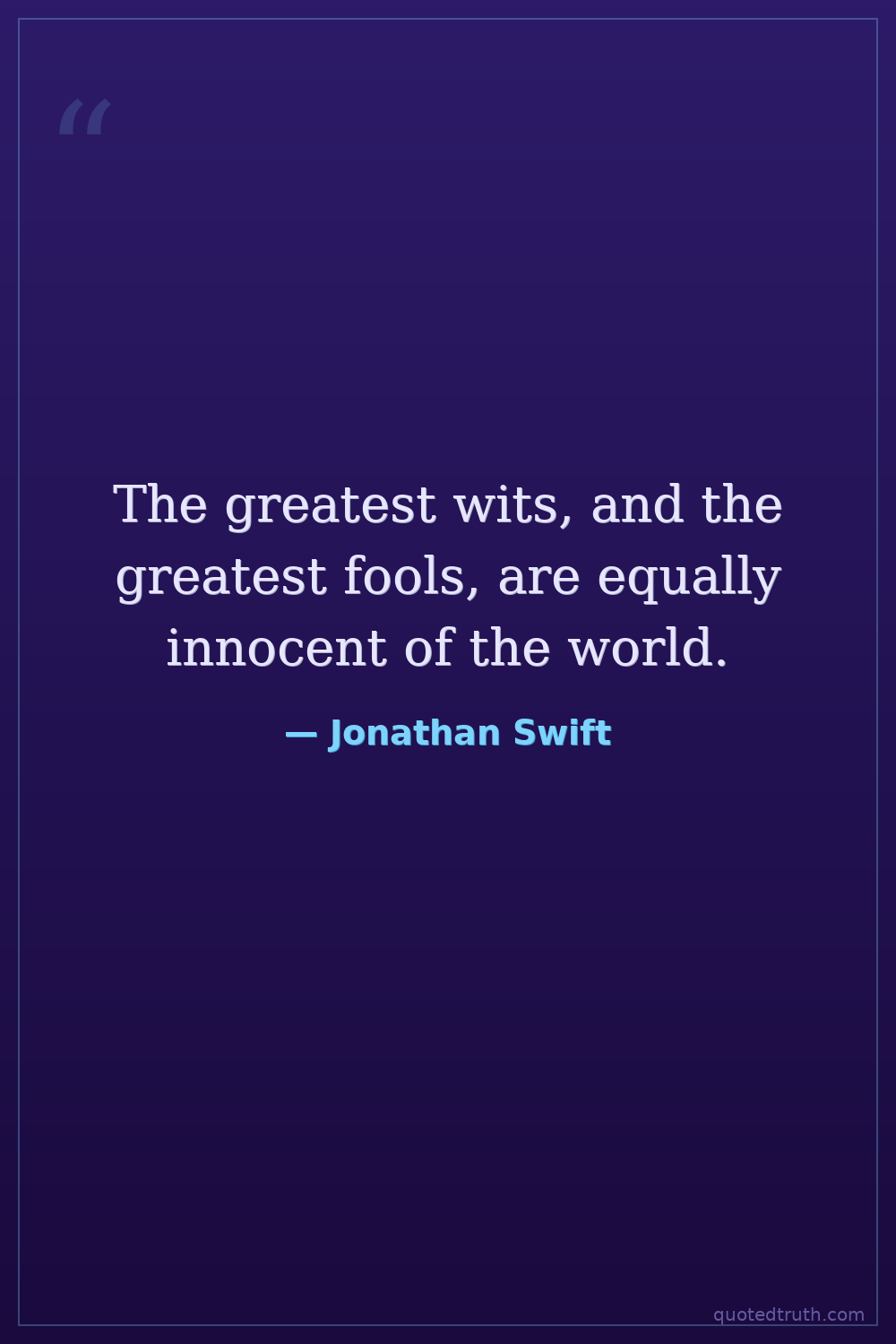
Jonathan Swift — "The greatest wits, and the greatest fools, are equally innocent of the world."
The greatest wits, and the greatest fools, are equally innocent of the world.
The greatest wits, and the greatest fools, are equally innocent of the world.
Click any product to generate a realistic preview. Up to 3 at a time.
* Initial load can take up to 90 seconds — revising the preview in another color is nearly instant.
"Few are qualified to shine in company; but it is in most men's power to be agreeable."
"For what the world calls virtue, is but a compound of vices."
"If a man would do good, he must be able to bear evil."
"If Heaven had looked upon riches to be a valuable thing, it would not have given them to such a scoundrel."
"Argument is the worst of all instruments for the discovery of truth."
Anglo-Irish satirist and Dean of Dublin's St Patrick's Cathedral whose Gulliver's Travels (1726) and A Modest Proposal (1729) are the canonical English-language satires. Closely associated with Alexander Pope (Scriblerus Club poet and collaborator) and John Gay (Beggar's Opera author and satirical contemporary). For an intellectual contrast, see Daniel Defoe, English Whig journalist and Robinson Crusoe author (1660-1731) — Defoe's Crusoe (1719) celebrates Enlightenment self-reliance and the colonial-mercantile project; Swift's Gulliver (1726) systematically dismantles every form of human pretension Defoe celebrated. The cleanest Augustan Whig-vs-Tory literary pairing — optimistic-empirical vs misanthropic-satirical.
Found in 1 providers: grok
1 source checked
Your cart is empty