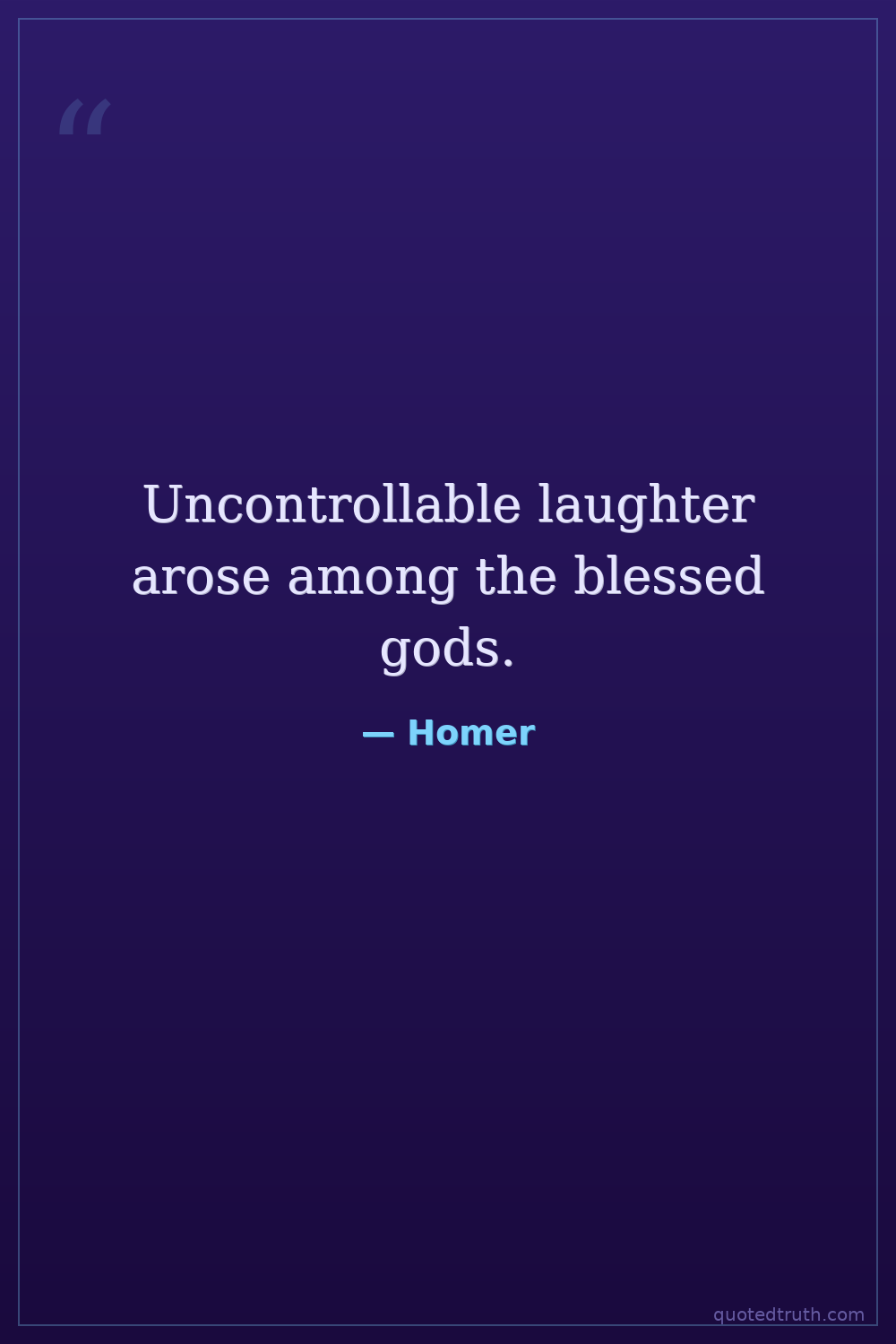
Homer — "Uncontrollable laughter arose among the blessed gods."
Uncontrollable laughter arose among the blessed gods.
Uncontrollable laughter arose among the blessed gods.
Click any product to generate a realistic preview. Up to 3 at a time.
* Initial load can take up to 90 seconds — revising the preview in another color is nearly instant.
"Fool, prate not to me about covenants. There can be no covenants between men and lions, wolves and lambs can never be of one mind, but hate each other out and out and through. Therefore there can be n…"
"Sleep and death, the two brothers."
"And nature is of mortals once deceased. For they nor muscle have, nor flesh, nor bone; All those (the spirit from the body once. Divorced) the violence of fire consumes, And, like a dream, the soul fl…"
"Beauty, terrible beauty! A deathless goddess — so she strikes our eyes!"
"Strange to behold, what blame these mortals can bring against godhead! For their ills, they assert, are from us, when they themselves by their mad recklessness have pain far past what is fated."
Greek epic poet traditionally credited with the Iliad and the Odyssey, the foundational works of Western literature. Closely associated with Hesiod (near-contemporary Greek poet of Theogony and Works and Days). For an intellectual contrast, see Plato, Greek philosopher of the Republic — Republic Book X bans the poets from the ideal city, with Homer as the explicit target — Plato argued Homer's gods set immoral examples and that poetry corrupts moral education. The founding philosophy-versus-poetry quarrel of Western thought.
Your cart is empty