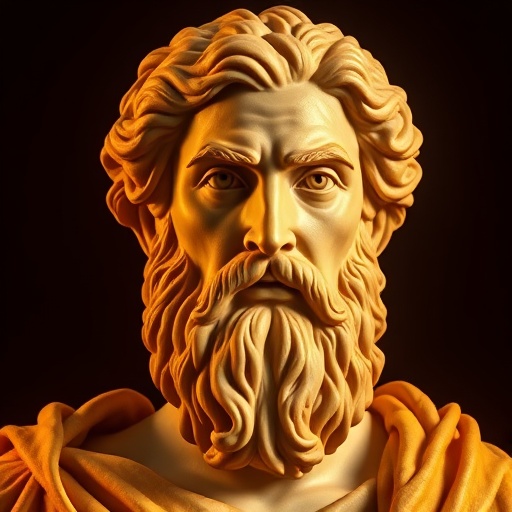
Homer — "The rule of the many is not well. One must be chief. In war and one the king."
The rule of the many is not well. One must be chief. In war and one the king.
The rule of the many is not well. One must be chief. In war and one the king.
Click any product to generate a realistic preview. Up to 3 at a time.
* Initial load can take up to 90 seconds — revising the preview in another color is nearly instant.
"And overpowered by memory both men gave way to grief. Priam wept freely for man - killing Hector, throbbing, crouching before Achilles' feet as Achilles wept himself, now for his father, now for Patro…"
"I didn't lie! I just created fiction with my mouth!"
"Nobody -- that's my name. Nobody -- so my mother and father call me, all my friends."
"A man's greatest possession is his self-respect."
"But death is universal. Even gods cannot protect the people that they love, when fate and cruel death catch up with them."
Greek epic poet traditionally credited with the Iliad and the Odyssey, the foundational works of Western literature. Closely associated with Hesiod (near-contemporary Greek poet of Theogony and Works and Days). For an intellectual contrast, see Plato, Greek philosopher of the Republic — Republic Book X bans the poets from the ideal city, with Homer as the explicit target — Plato argued Homer's gods set immoral examples and that poetry corrupts moral education. The founding philosophy-versus-poetry quarrel of Western thought.
Found in 1 providers: gemini
1 source checked
Your cart is empty