Homer — "Then welcome fate! 'Tis true I perish, yet I perish great: Yet in a mighty deed …"
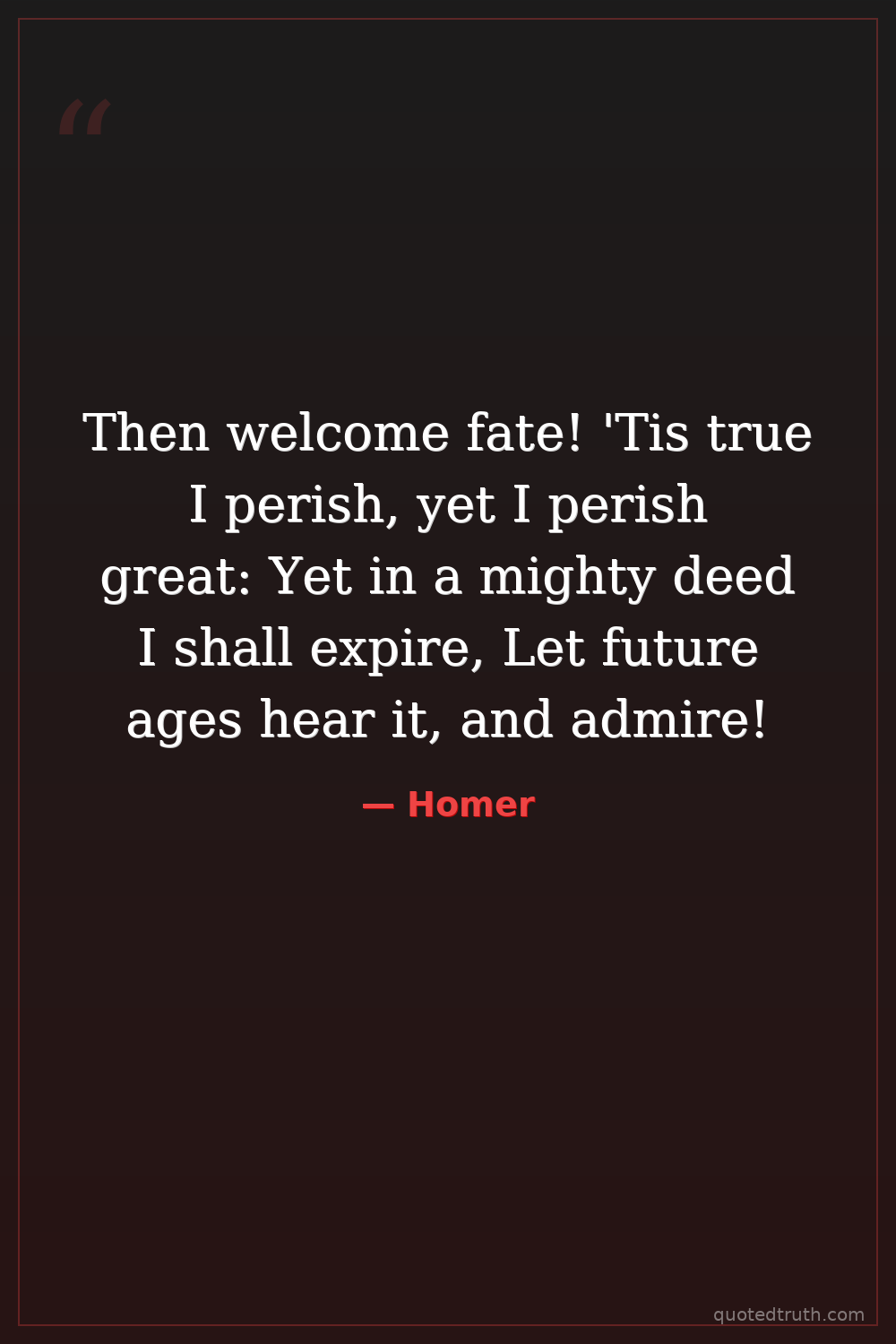
Then welcome fate! 'Tis true I perish, yet I perish great: Yet in a mighty deed I shall expire, Let future ages hear it, and admire!
Then welcome fate! 'Tis true I perish, yet I perish great: Yet in a mighty deed I shall expire, Let future ages hear it, and admire!
Click any product to generate a realistic preview. Up to 3 at a time.
* Initial load can take up to 90 seconds — revising the preview in another color is nearly instant.
"Melantho, a female slave in Odysseus' household, is called a 'little dog' by Odysseus."
"Two diverse gates there are of bodiless dreams, These of sawn ivory, and those of horn. Such dreams as issue where the ivory gleams Fly without fate, and turn our hopes to scorn. But dreams which issu…"
"Necessity demands our daily bread; Hunger is insolent, and will be fed."
"The young men were eager for battle, but the old men were wise."
"But among the blessed immortals uncontrollable laughter went up as they saw Hephaestos bustling about the palace."
Greek epic poet traditionally credited with the Iliad and the Odyssey, the foundational works of Western literature. Closely associated with Hesiod (near-contemporary Greek poet of Theogony and Works and Days). For an intellectual contrast, see Plato, Greek philosopher of the Republic — Republic Book X bans the poets from the ideal city, with Homer as the explicit target — Plato argued Homer's gods set immoral examples and that poetry corrupts moral education. The founding philosophy-versus-poetry quarrel of Western thought.
Your cart is empty