Edgar Allan Poe — "He knew that Hop-Frog was not fond of wine; for it excited the poor cripple almo…"
He knew that Hop-Frog was not fond of wine; for it excited the poor cripple almost to madness; and madness is no comfortable feeling.
He knew that Hop-Frog was not fond of wine; for it excited the poor cripple almost to madness; and madness is no comfortable feeling.
Click any product to generate a realistic preview. Up to 3 at a time.
* Initial load can take up to 90 seconds — revising the preview in another color is nearly instant.
"It is with literature as with women: one must have a certain experience to appreciate its value."
"My generous throat has shared among the fishes."
"Were I to be asked what it is that gives me the most intense delight, I should say a conversation with a beautiful woman."
"I have a horror of being misunderstood."
"Man is now only more active – not more happy – nor more wise, than he was 6000 years ago."
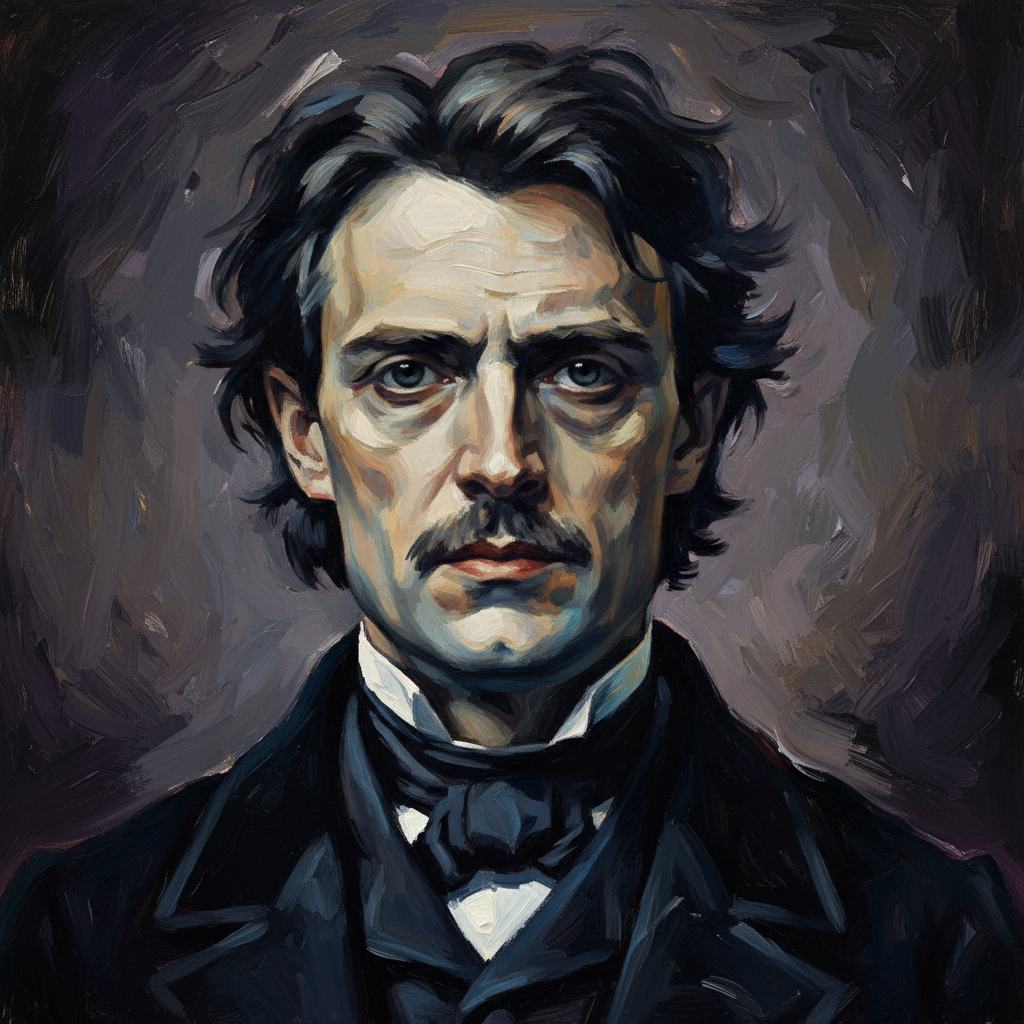
American Gothic poet and short-story writer who invented the detective story (Murders in the Rue Morgue) and shaped horror literature. Closely associated with Nathaniel Hawthorne (fellow American Gothic) and Charles Baudelaire (his French translator and torch-bearer). For an intellectual contrast, see Ralph Waldo Emerson, Transcendentalist optimist of self-reliance — Poe wrote essays attacking the entire Transcendentalist circle as didactic and intellectually thin — he derisively called them 'Frogpondians' and treated their cheerful mysticism as the literary opposite of his macabre realism.
Found in 1 providers: gemini
1 source checked
Your cart is empty