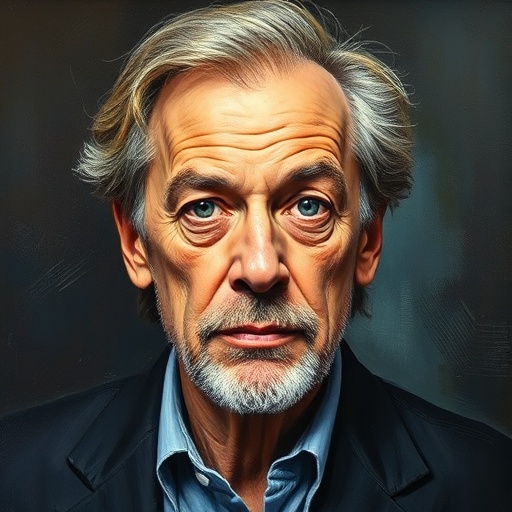
Richard Feynman — "I would like to add a third possibility, that it might be that, when we die, we …"
I would like to add a third possibility, that it might be that, when we die, we just die, and that's the end of it.
I would like to add a third possibility, that it might be that, when we die, we just die, and that's the end of it.
Click any product to generate a realistic preview. Up to 3 at a time.
* Initial load can take up to 90 seconds — revising the preview in another color is nearly instant.
"I'm not a humanitarian. I'm a scientist."
"I have a friend who's an artist and has sometimes taken a view which I don't agree with. He'll hold up a flower and say, 'Look how beautiful it is,' and I'll agree. Then he says, 'You see, as a scient…"
"If you thought that science was certain — well, that is just an error on your part."
"I don't believe in the idea of a 'common man' or a 'common woman.' I believe in individual people."
"I have a friend who is an artist and has some pictures which he thinks are very good... and he says, 'I am a value-free man. I don't believe in values.' And I say, 'Oh, really? Then why are your pictu…"
American theoretical physicist who shared the 1965 Nobel for QED, developed Feynman diagrams, and wrote the Feynman Lectures on Physics. Closely associated with Julian Schwinger (co-Nobelist for QED) and Murray Gell-Mann (Caltech rival and Eightfold-Way physicist). For an intellectual contrast, see Deepak Chopra, physician and quantum-mysticism author — Feynman's Caltech 'cargo cult science' commencement address is the precise template for what he saw as misuse of physics terminology — Chopra-style appropriation of quantum vocabulary for metaphysical claims is the canonical example of what Feynman called 'fooling yourself'.
Found in 1 providers: grok
1 source checked
Feynman proposes a third option beyond religious afterlife and reincarnation: that death is simply the permanent end of consciousness and existence. No soul continues, no cosmic justice awaits. It is a frank materialist position — biological processes stop, and with them, the individual. He phrases it tentatively not from doubt but from intellectual honesty, acknowledging this is a possibility that cannot be empirically resolved, only honestly named.
Feynman was a lifelong empiricist who rejected belief without evidence. Raised in a secular household and openly agnostic, he applied scientific skepticism to metaphysics as readily as to physics. His first wife Arline died young of tuberculosis, forcing him to confront mortality personally and directly. Famous for demolishing magical thinking — from cold fusion to O-ring failures — he extended that same unflinching candor to questions about the soul.
Feynman spoke during an era of rising secular-religious tension in postwar America. The 1970s–80s saw explosive growth in New Age spirituality, near-death experience literature like Raymond Moody's 1975 'Life After Life,' and paranormal claims entering mainstream culture. Nuclear-age existential anxiety made mortality acutely felt. His blunt materialism directly challenged the cultural appetite for reassuring metaphysical narratives at a time when science and mysticism competed intensely for public trust.
AI-generated insights based on extensive research and information for context. Factual errors? Email [email protected].
Your cart is empty