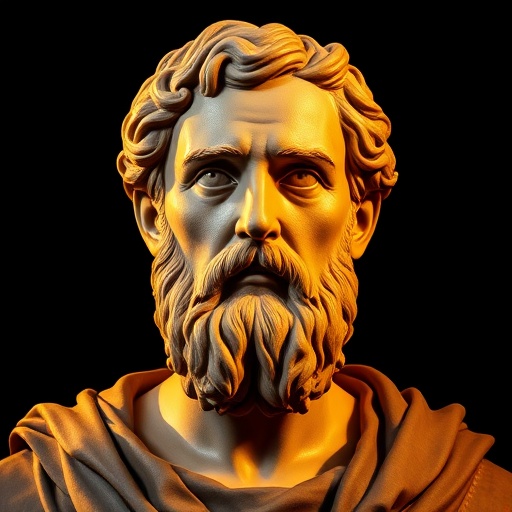
Saint Paul — "If I must boast, I will boast of the things that show my weakness."
If I must boast, I will boast of the things that show my weakness.
If I must boast, I will boast of the things that show my weakness.
Click any product to generate a realistic preview. Up to 3 at a time.
* Initial load can take up to 90 seconds — revising the preview in another color is nearly instant.
"Awake to righteousness, and sin not; for some have not the knowledge of God: I speak this to your shame."
"And if they will learn any thing, let them ask their husbands at home: for it is a shame for women to speak in the church."
"For in him we live and move and have our being."
"Be angry, and do not sin: do not let the sun go down on your wrath."
"And unto the Jews I became as a Jew, that I might gain the Jews; to them that are under the law, as under the law, that I might gain them that are under the law; To them that are without law, as witho…"
Found in 1 providers: gemini
1 source checked
Real strength or credibility does not come from flaunting achievements, status, or personal triumphs. Instead, honesty about one's limitations, struggles, and failures reveals deeper character. Rather than competing through self-promotion, a person gains genuine authority by openly admitting where they fall short. Vulnerability becomes the proof of authenticity, because anyone can exaggerate successes, but few willingly own their flaws. Humility outranks bravado when it comes to earning trust or demonstrating substance.
Paul wrote this defending his apostleship against rivals who bragged about credentials, visions, and eloquence. A former Pharisee and persecutor of Christians, he had plenty to boast about by worldly standards, yet he pointed instead to beatings, shipwrecks, imprisonments, and a mysterious 'thorn in the flesh.' His theology centered on grace working through human frailty, so highlighting weakness was not false modesty but the core logic of his gospel and his tentmaking, itinerant life.
First-century Greco-Roman culture prized honor, rhetorical skill, and public self-promotion, with traveling philosophers and orators competing for patrons by showcasing achievements and lineage. In Corinth especially, 'super-apostles' were using this boast-culture to discredit Paul. Weakness, suffering, and manual labor were markers of low social status, so Paul's inversion—claiming weakness as credential—was radically countercultural. It reframed Roman honor norms through the lens of a crucified messiah, challenging the era's entire value hierarchy.
AI-generated insights based on extensive research and information for context. Factual errors? Email [email protected].
Your cart is empty