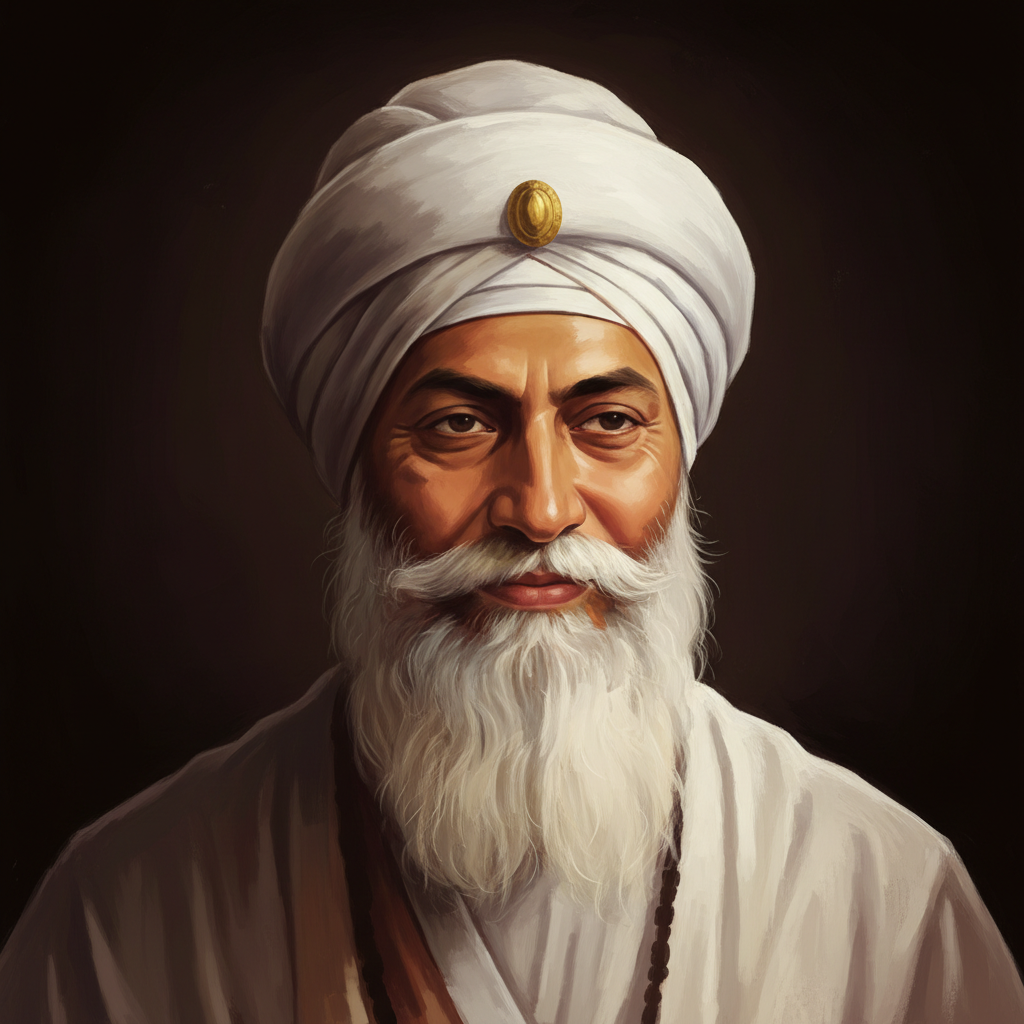
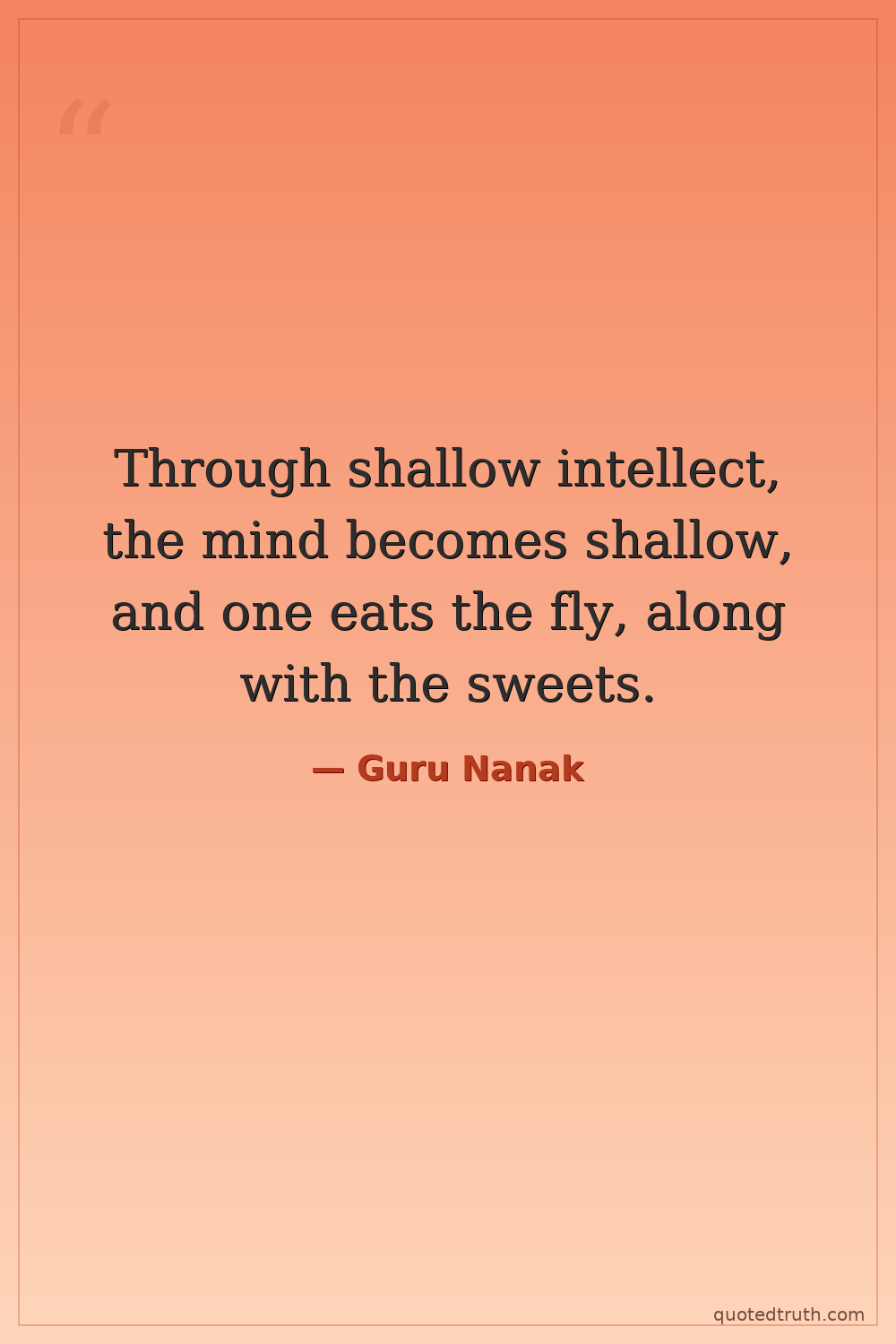
Guru Nanak — "Through shallow intellect, the mind becomes shallow, and one eats the fly, along…"
Through shallow intellect, the mind becomes shallow, and one eats the fly, along with the sweets.
Through shallow intellect, the mind becomes shallow, and one eats the fly, along with the sweets.
Click any product to generate a realistic preview. Up to 3 at a time.
* Initial load can take up to 90 seconds — revising the preview in another color is nearly instant.
"The mind is like a wild elephant, it needs the goad of the Guru's word to control it."
"The greatest gift is to share. Especially if it's your last piece of samosa."
"He who considers himself humble, is the highest of all."
"Alone let him constantly meditate in solitude on that which is salutary for his soul, for he who meditates in solitude attains supreme bliss."
"Conquer your mind and conquer the world."
Founder of Sikhism and the first of the Ten Sikh Gurus, whose teachings of one universal God and rejection of caste shaped Punjab. Closely associated with Kabir (mystical poet whose verses appear in the Sikh Guru Granth Sahib). For an intellectual contrast, see Brahmanical orthodoxy, the Hindu caste-and-ritual establishment of his era — Sikhism was founded as a deliberate alternative to both Hindu ritual hierarchy and Islamic exclusivism — Nanak's universalism was a structural rejection of caste and priestly mediation.
Found in 1 providers: gemini
1 source checked
When reasoning is superficial and the mind lacks depth, a person cannot distinguish what is beneficial from what is harmful. They consume the bad along with the good without realizing it — like swallowing a fly hidden in something sweet. True discernment requires cultivating a deeper, more reflective intellect capable of separating genuine wisdom from deception or impurity.
Guru Nanak spent his life challenging blind ritual and superficial religious practice across Hindu and Muslim traditions. He consistently taught that sincere inner reflection — through Nam Simran, meditation on the Divine Name — develops the intellect beyond surface-level thinking. His own journeys across Asia exposed him to countless hollow doctrines; this quote embodies his conviction that spiritual shallowness leads people to unknowingly embrace falsehood alongside truth.
In 15th–16th century Punjab, religious authority was often dominated by priestly classes who enforced ritual without genuine understanding, and ordinary people had little access to critical spiritual education. Corrupt middlemen in both Hinduism and Islam exploited followers who could not distinguish authentic teaching from exploitation. Guru Nanak's message cut through this fog, urging common people to develop their own discernment rather than blindly following institutionalized but intellectually shallow religious authority.
AI-generated insights based on extensive research and information for context. Factual errors? Email [email protected].
Your cart is empty