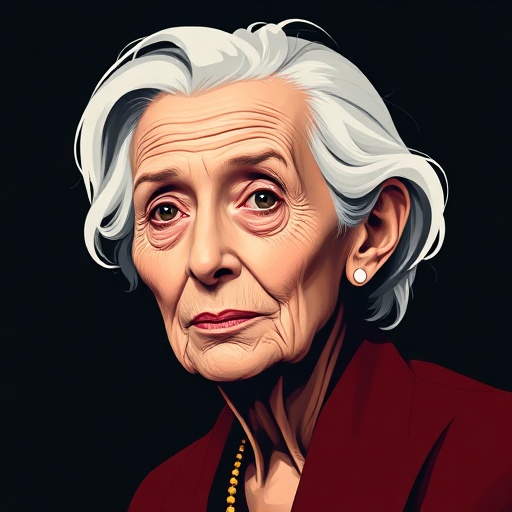
Jane Goodall — "We are a part of the natural world, and when we destroy it, we destroy ourselves…"
We are a part of the natural world, and when we destroy it, we destroy ourselves.
We are a part of the natural world, and when we destroy it, we destroy ourselves.
Click any product to generate a realistic preview. Up to 3 at a time.
* Initial load can take up to 90 seconds — revising the preview in another color is nearly instant.
"My mother always told me that if I wanted to achieve something, I had to work hard and never give up."
"The power of one individual to make a difference is immense, and we should never underestimate it."
"I've been fortunate to spend my life among animals, and they've taught me so much about what it means to be human."
"My early mentors were animals. They taught me patience, observation, and how to listen."
"We need to be voices for the voiceless, and advocates for those who cannot speak for themselves."
British primatologist who in 1960 began the longest-running wild primate study at Gombe Stream, transforming our understanding of chimpanzees. Closely associated with Dian Fossey (mountain-gorilla researcher) and Birutė Galdikas (orangutan researcher; together with Goodall and Fossey one of Louis Leakey's 'Trimates'). For an intellectual contrast, see Walter Palmer, American dentist who killed Cecil the Lion in Zimbabwe in 2015 — Palmer represents the trophy-hunting tradition Goodall's life's work has been organized against — the colonial-era hunter-naturalist worldview that treated primates and big game as specimens or trophies, which Goodall's Roots & Shoots and Jane Goodall Institute exist specifically to displace.
Found in 1 providers: grok
1 source checked
Humans are not separate from nature — we evolved inside it and depend on it every day for clean air, water, food, and a stable climate. Damaging ecosystems is ultimately damaging ourselves. Deforestation, species extinction, and pollution circle back to erode human health, food security, and survival. We are one thread in the web of life, and cutting other threads unravels our own.
Goodall spent decades living in Gombe Stream, Tanzania, tracking wild chimpanzees — documenting tool use, social bonds, and grief. Watching deforestation erase chimp habitat converted her from pure scientist into global activist. She founded the Jane Goodall Institute and the Roots & Shoots youth network, driven by a lifelong conviction that humans and wildlife share an indivisible biological fate — not just geography.
Goodall's career spans from the 1960s onward, coinciding with Rachel Carson's Silent Spring (1962), which exposed DDT's destruction of wildlife. By the 1980s–90s, Amazon deforestation hit record rates, climate science entered mainstream debate, and early UN Environment summits put biodiversity loss on political agendas. Her words gave moral weight to data showing ecological collapse was not a distant abstraction but an immediate human crisis.
AI-generated insights based on extensive research and information for context. Factual errors? Email [email protected].
Your cart is empty