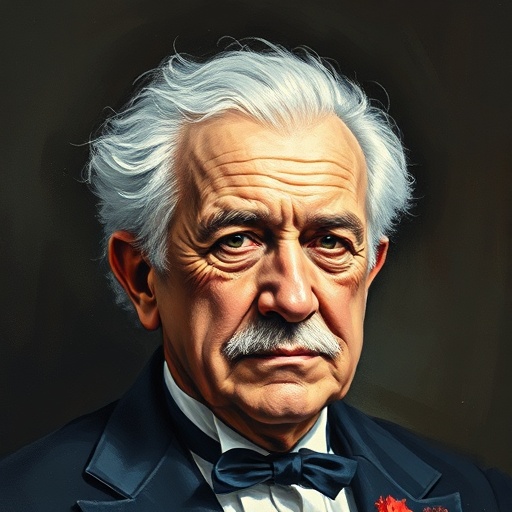
Thomas Edison — "We will make electricity so cheap that only the rich will burn candles."
We will make electricity so cheap that only the rich will burn candles.
We will make electricity so cheap that only the rich will burn candles.
Click any product to generate a realistic preview. Up to 3 at a time.
* Initial load can take up to 90 seconds — revising the preview in another color is nearly instant.
"The chief function of the body is to carry the brain around."
"Anything that won't sell, I don't want to invent."
"I have not failed. I've just found 10,000 ways that won't work."
"I often think that the night is more alive and more richly colored than the day."
"Hell, there are no rules here—we're trying to accomplish something."
A confident, somewhat boastful, and witty prediction about the future of electricity.
Date: Late 19th - early 20th century (approximate)
Work & MoneyFound in 2 providers: gemini,deepseek
2 sources checked
Edison predicts that electric power will become so affordable and widely available that candles, once the default lighting source, will flip into a luxury novelty. He frames progress as inversion: the old necessity becomes the new indulgence, while the modern innovation becomes the everyday baseline. It is a confident forecast that technology democratizes comfort, pushing expensive legacy tools into the hands of those who can afford nostalgia.
Edison spent decades commercializing the incandescent bulb and built the Pearl Street Station in 1882, the first central power plant serving Manhattan customers. He wasn't just inventing bulbs; he was engineering the entire generation, distribution, and metering system. This quote captures his salesman-inventor mindset: promising mass accessibility to justify heavy infrastructure investment, while positioning his DC electrical network as the inevitable replacement for gaslight and candle economies.
In the 1880s, American homes burned candles, whale oil, kerosene, and gaslight. Electricity was an elite curiosity, installed first in J.P. Morgan's mansion and downtown financial offices. Edison was racing Westinghouse and Tesla during the War of Currents, courting investors and municipalities to fund grids. Promising cheap universal power countered skepticism that electricity would stay a rich man's toy, and it fit the Gilded Age faith that industrial invention would lift ordinary living standards.
AI-generated insights based on extensive research and information for context. Factual errors? Email [email protected].
Your cart is empty