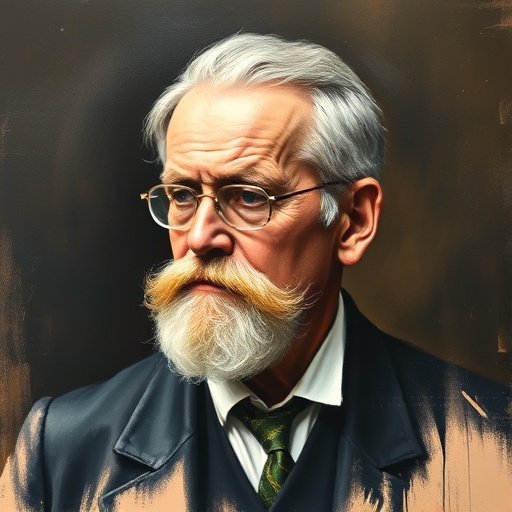
Gregor Mendel — "To live without experiencing some shame and blushes of admiration would surely b…"
To live without experiencing some shame and blushes of admiration would surely be a wretched life.
To live without experiencing some shame and blushes of admiration would surely be a wretched life.
Click any product to generate a realistic preview. Up to 3 at a time.
* Initial load can take up to 90 seconds — revising the preview in another color is nearly instant.
"The traits of living things are governed by unseen laws."
"The experiments have been carried out on a small scale, but the results are clear and unambiguous."
"The characters of the two parental forms are transmitted to the hybrid in an unchanged form."
"The future will judge my work more fairly than the present."
"Nature loves simplicity and unity."
Found in 1 providers: gemini
1 source checked
A full life requires moments of both embarrassment and awestruck wonder. Shame keeps us honest and morally grounded, while admiration opens us to beauty and greatness beyond ourselves. Avoiding both emotions entirely means living a shallow, unfeeling existence — never risking vulnerability, never being moved by anything larger than oneself. True living demands emotional engagement, even when uncomfortable.
Mendel spent his life in a monastery, pursuing painstaking pea-plant experiments largely ignored by contemporaries. He knew shame — his failed university exams, his unrecognized work — yet felt profound admiration for nature's hidden mathematical order. His humble monastic character embraced wonder as a spiritual and scientific virtue, treating curiosity and reverence as inseparable from honest inquiry.
Mendel worked in the 1850s-1860s, an era of revolutionary scientific upheaval — Darwin published On the Origin of Species in 1859, industrialization reshaped society, and religious institutions confronted radical new ideas. In this climate of intellectual ferment, emotional restraint was often prized over openness. Mendel's sentiment pushed back, affirming that vulnerability and wonder were essential human dignities worth preserving.
AI-generated insights based on extensive research and information for context. Factual errors? Email [email protected].
Your cart is empty