Benjamin Franklin — "We are all born ignorant, but one must work hard to remain stupid."
We are all born ignorant, but one must work hard to remain stupid.
We are all born ignorant, but one must work hard to remain stupid.
Click any product to generate a realistic preview. Up to 3 at a time.
* Initial load can take up to 90 seconds — revising the preview in another color is nearly instant.
"It is universally well known, That in digesting our common Food, there is created or produced in the Bowels of human Creatures, a great Quantity of Wind. That the permitting this Air to escape and mix…"
"Anger is never without a Reason, but seldom with a good One."
"A good example is the best sermon."
"Being ignorant is not so much a shame, as being unwilling to learn."
"Rather go to bed supperless, than rise in debt."
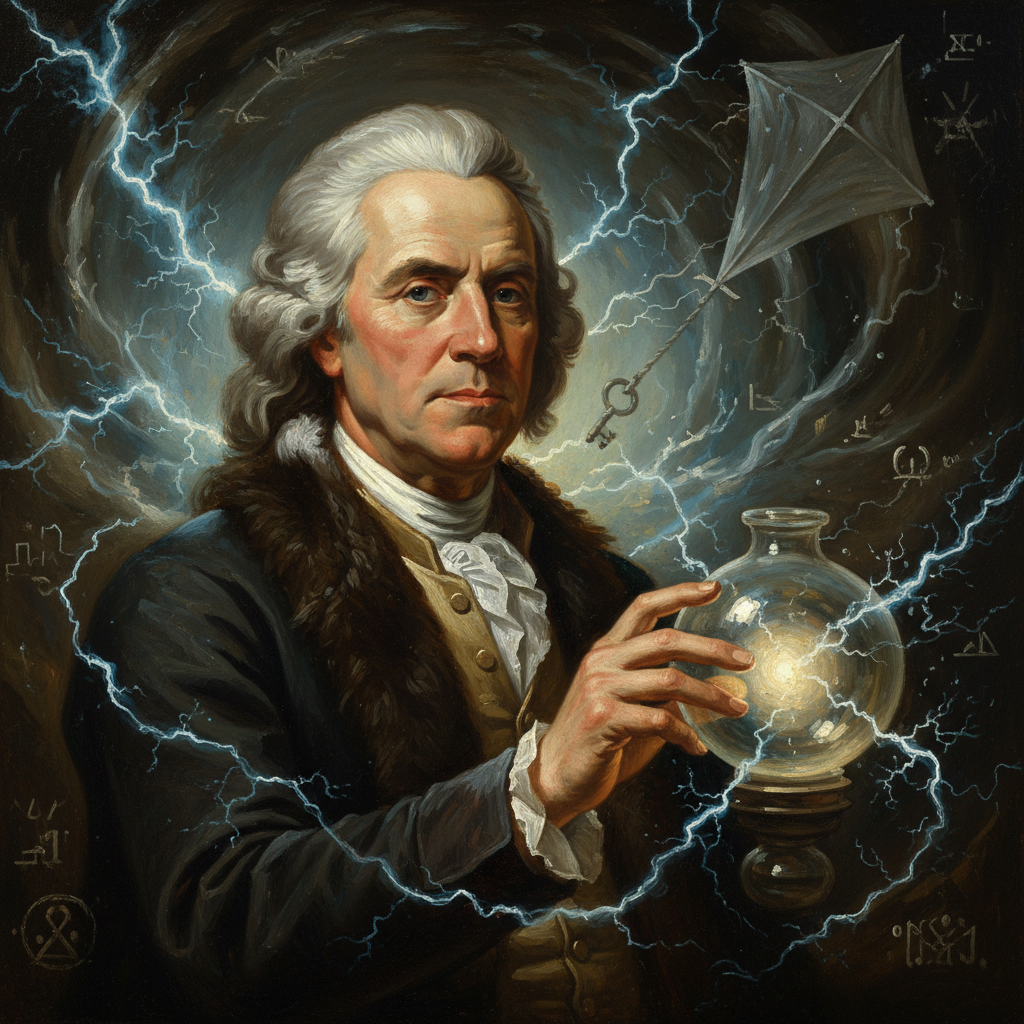
Polymath Founding Father, diplomat, and Poor Richard's Almanack author who helped draft the Declaration of Independence and the Constitution. Closely associated with John Adams (fellow Founder, Massachusetts statesman) and Thomas Jefferson (fellow Declaration drafter). For an intellectual contrast, see Thomas Hutchinson, last royal governor of colonial Massachusetts — Franklin leaked Hutchinson's loyalist correspondence to Boston in 1772 to inflame revolutionary sentiment — Hutchinson represented the colonial-aristocrat crown-loyalty that Franklin's revolution was organized to dismantle.
Found in 1 providers: gemini
1 source checked
Ignorance is the natural starting point for every human being — we arrive in the world knowing nothing. But stupidity, Franklin argues, is an active choice. To stay uninformed despite access to knowledge requires deliberate effort: ignoring evidence, rejecting reason, refusing to learn. The quote flips our instinct to excuse ignorance as passive and frames intellectual stagnation as something a person must actively work to maintain.
Franklin was almost entirely self-educated, apprenticed as a printer at twelve with minimal formal schooling. Yet he mastered multiple languages, conducted groundbreaking electrical experiments, negotiated treaties, and wrote widely-read almanacs. He founded America's first public lending library in 1731 and helped establish what became the University of Pennsylvania. His life was proof that intellectual curiosity, not birthright or classroom time, determines what a person becomes.
Franklin lived during the Enlightenment, when thinkers championed reason over superstition and tradition. In colonial America, formal education was scarce and literacy rates were low — most colonists never attended school beyond basics. Yet books, pamphlets, and almanacs were spreading ideas rapidly. Franklin saw self-improvement as a civic and moral duty. In this environment, choosing to remain ignorant when knowledge was newly accessible was genuinely viewed as a moral failing.
AI-generated insights based on extensive research and information for context. Factual errors? Email [email protected].
Your cart is empty