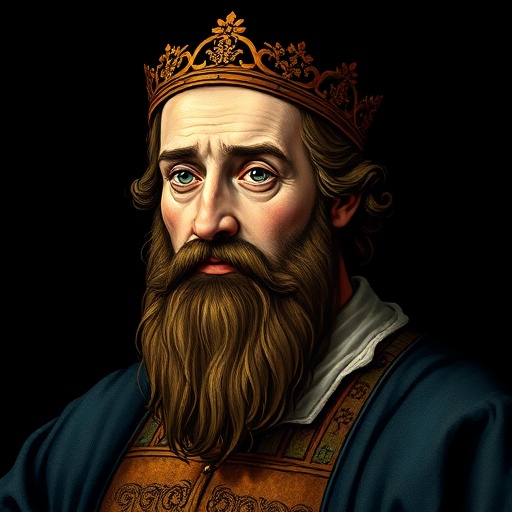
Johannes Gutenberg — "Give me twenty-six soldiers of lead and I will conquer the world."
Give me twenty-six soldiers of lead and I will conquer the world.
Give me twenty-six soldiers of lead and I will conquer the world.
Click any product to generate a realistic preview. Up to 3 at a time.
* Initial load can take up to 90 seconds — revising the preview in another color is nearly instant.
"Religious truth is captive in a small number of manuscript books, which guard the common treasure, instead of diffusing it. Let us break the seal which holds the holy things; give wings to the truth t…"
"It is a press, certainly, but a press from which shall soon flow in inexhaustible streams the most abundant and most marvelous liquor that has ever flowed to relieve the thirst of men!"
"God suffers in the great multitudes whom his sacred word cannot reach."
"The work of the scribes is doomed to oblivion."
"Religious truth is captive in a small number of little manuscripts which guard the common treasures, instead of expanding them."
Found in 1 providers: gemini
1 source checked
The 'twenty-six soldiers of lead' are the alphabet's letters cast as metal type. With these simple tools, a printer can produce any text imaginable—news, scripture, philosophy, science—and distribute it to thousands. Controlling the means of communication means controlling minds and history. Knowledge, once printed and spread, becomes unstoppable. It is a declaration that information is the ultimate weapon, more decisive than armies or gold.
Gutenberg spent decades perfecting the casting of individual metal letters in a lead-antimony-tin alloy durable enough for repeated printing. His Mainz workshop produced the famous 42-line Bible around 1455, proving the press could replicate any text at scale. This quote mirrors his conviction that his invention was not merely a trade tool but a civilizational force that would reshape religion, politics, and learning across all of Europe.
In 15th-century Europe, books were hand-copied by monks and cost a laborer's annual wage each. The Church controlled information; literacy was rare outside clergy and nobility. Gutenberg worked as the Ottoman Empire conquered Constantinople in 1453, threatening Christian Europe. His press arrived amid religious tension and early Renaissance awakening. Within decades, printed books enabled the Protestant Reformation and spread humanist ideas, vindicating his claim to world-changing power.
AI-generated insights based on extensive research and information for context. Factual errors? Email [email protected].
Your cart is empty