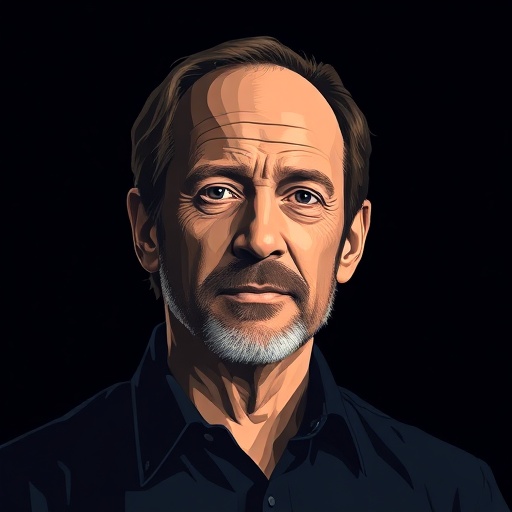
Tim Berners-Lee — "The web is not a privilege, it is a right."
The web is not a privilege, it is a right.
The web is not a privilege, it is a right.
Click any product to generate a realistic preview. Up to 3 at a time.
* Initial load can take up to 90 seconds — revising the preview in another color is nearly instant.
"Governments must treat the internet as a basic utility—like water."
"I’m not happy with the way the web has become a battleground for misinformation."
"The biggest threat to the web is centralization. We need to decentralize it."
"The web is a tool for democracy, but it can also be used for dictatorship."
"The web is broken, and we need to fix it. It's a moral imperative."
British computer scientist who invented the World Wide Web at CERN in 1989 and founded the W3C, championing open web standards. Closely associated with Vint Cerf (TCP/IP co-creator and 'father of the internet') and Marc Andreessen (Mosaic browser creator and Netscape co-founder). For an intellectual contrast, see Mark Zuckerberg, Facebook (Meta) founder — Zuckerberg's walled-garden Facebook is the canonical contemporary opposite of Berners-Lee's open-web vision; Berners-Lee's Solid project and 'recapture the web' essays are explicitly written as a rebuttal to the platform-monopoly model Facebook pioneered.
Found in 1 providers: deepseek
1 source checked
Access to the internet should be treated as a fundamental human right, not a luxury reserved for the wealthy or well-connected. Just as societies guarantee access to education, clean water, or free speech, internet connectivity enables participation in modern economic, civic, and social life. Denying access based on income, geography, or government control creates a two-tiered world where millions are locked out of opportunity.
Berners-Lee invented the Web in 1989 at CERN and deliberately gifted it to the world without patents or licensing fees. He founded the World Wide Web Foundation to promote universal access and authored the Contract for the Web in 2019. His entire career reflects a belief that the Web's power belongs to humanity collectively, not to corporations or governments. This quote is essentially his founding principle restated as a demand.
In the 2000s and 2010s, internet access shifted from novelty to necessity for jobs, banking, healthcare, and education—yet four billion people remained offline. Governments in China, Russia, and Iran began censoring and restricting the Web. Meanwhile, surveillance capitalism emerged, with platforms monetizing personal data at scale. The UN formally recognized internet access as a human right in 2016, validating Berners-Lee's framing as connectivity became the defining infrastructure divide of the century.
AI-generated insights based on extensive research and information for context. Factual errors? Email [email protected].
Your cart is empty