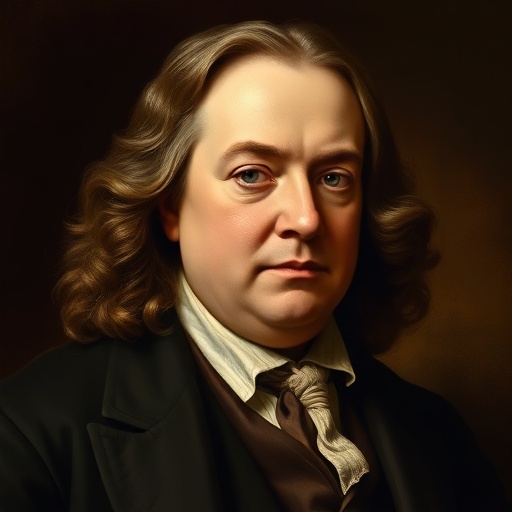
Jonathan Swift — "I never saw, hear, nor read, that the clergy were beloved in any nation where Ch…"
I never saw, hear, nor read, that the clergy were beloved in any nation where Christianity was the religion of the country.
I never saw, hear, nor read, that the clergy were beloved in any nation where Christianity was the religion of the country.
Click any product to generate a realistic preview. Up to 3 at a time.
* Initial load can take up to 90 seconds — revising the preview in another color is nearly instant.
"The commonest things are the most useful; which shows the wisdom of God, who has made them common."
"What they do in the north, they do not in the south."
"The difference between a madman and a sane man is that the madman is in a minority."
"And it is to be hoped that no gentleman will be so uncivil as to refuse to dine upon a child who has been so well fattened."
"The greatest ornament of an eminent character is humility."
Anglo-Irish satirist and Dean of Dublin's St Patrick's Cathedral whose Gulliver's Travels (1726) and A Modest Proposal (1729) are the canonical English-language satires. Closely associated with Alexander Pope (Scriblerus Club poet and collaborator) and John Gay (Beggar's Opera author and satirical contemporary). For an intellectual contrast, see Daniel Defoe, English Whig journalist and Robinson Crusoe author (1660-1731) — Defoe's Crusoe (1719) celebrates Enlightenment self-reliance and the colonial-mercantile project; Swift's Gulliver (1726) systematically dismantles every form of human pretension Defoe celebrated. The cleanest Augustan Whig-vs-Tory literary pairing — optimistic-empirical vs misanthropic-satirical.
Your cart is empty