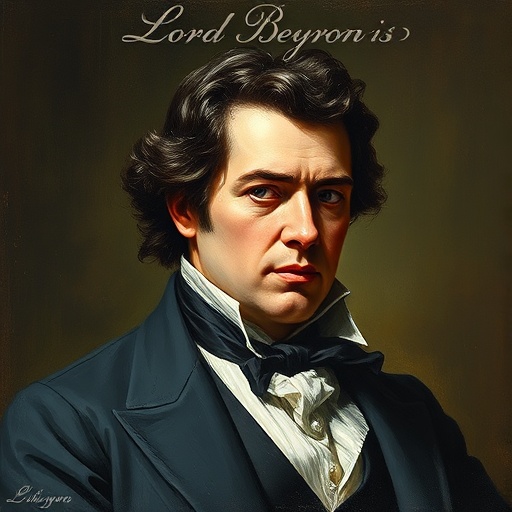
Lord Byron — "I have always been a friend of the oppressed, and an enemy of the oppressor."
I have always been a friend of the oppressed, and an enemy of the oppressor.
I have always been a friend of the oppressed, and an enemy of the oppressor.
Click any product to generate a realistic preview. Up to 3 at a time.
* Initial load can take up to 90 seconds — revising the preview in another color is nearly instant.
"I am a very solitary man, and I prefer the company of books to that of men."
"I wish he would explain his explanation."
"I am a very bad dancer, and I hate to dance."
"A woman's reputation is like a mirror, which a single breath can tarnish."
"I have a great love for beauty, and I believe it is the essence of life."
English Romantic poet whose Childe Harold's Pilgrimage (1812-18) and Don Juan (1819-24) made him a continent-wide celebrity; died at Missolonghi fighting for Greek independence. Closely associated with Percy Bysshe Shelley (Geneva summer companion and fellow second-generation Romantic) and John Keats (younger Romantic Byron mocked but later admired). For an intellectual contrast, see William Wordsworth, Lake Poet of pious nature-worship — Byron's mockery of 'the Lakers' Wordsworth, Coleridge, and Southey runs through Don Juan as a sustained literary feud across hundreds of stanzas. The cleanest Romantic-internal split between sincere-pastoral and cynical-worldly poetics.
Attributed to his political beliefs and actions in Greece.
Date: Early 19th century
PoliticalFound in 1 providers: grok
1 source checked
Your cart is empty