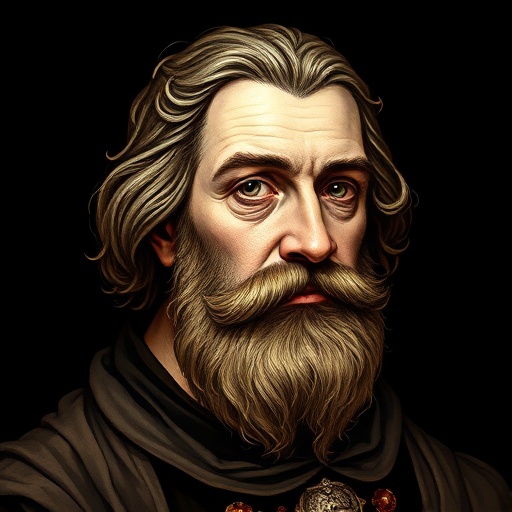
Geoffrey Chaucer — "And everich of us to lighten his herte, And of his tale anothere for to telle."
And everich of us to lighten his herte, And of his tale anothere for to telle.
And everich of us to lighten his herte, And of his tale anothere for to telle.
Click any product to generate a realistic preview. Up to 3 at a time.
* Initial load can take up to 90 seconds — revising the preview in another color is nearly instant.
"A good wyf was ther, of biside Bathe, But she was somdel deef, and that was scathe."
"Ther was also a Nonne, a Prioresse, That of hir smylyng was ful symple and coy."
"What is this world? what asketh men to have? Now with his love, now in his colde grave, Allone, withouten any compaignye."
"His curly hair looked as if they were pressed in a machine and his clothes were embellished with red and white, as if it were a meadow full of fresh flowers."
"he pricked her hard and deep, like one gone mad."
English poet, civil servant, and the father of English literature; The Canterbury Tales (~1387-1400) is the founding text of English-language storytelling. Closely associated with Giovanni Boccaccio (his Italian predecessor; the Decameron preceded the Canterbury Tales by ~40 years). For an intellectual contrast, see John Wycliffe, English theologian and Lollard reform-movement leader — Wycliffe and Chaucer were near-contemporaries in the same English Christian world — Chaucer's Wife of Bath and Pardoner are the canonical literary defense of fleshly humanity against the Lollard moral austerity that would later become English Puritanism. Earthy storytelling vs proto-Protestant moralism.
The Canterbury Tales, General Prologue (the Host setting up the storytelling game, implying the lighthearted and competitive nature of the journey)
Date: c. 1387-1400
Work & MoneyFound in 1 providers: gemini
1 source checked
Your cart is empty