Hippocrates — "A wise man should consider that health is the greatest of human blessings, and l…"
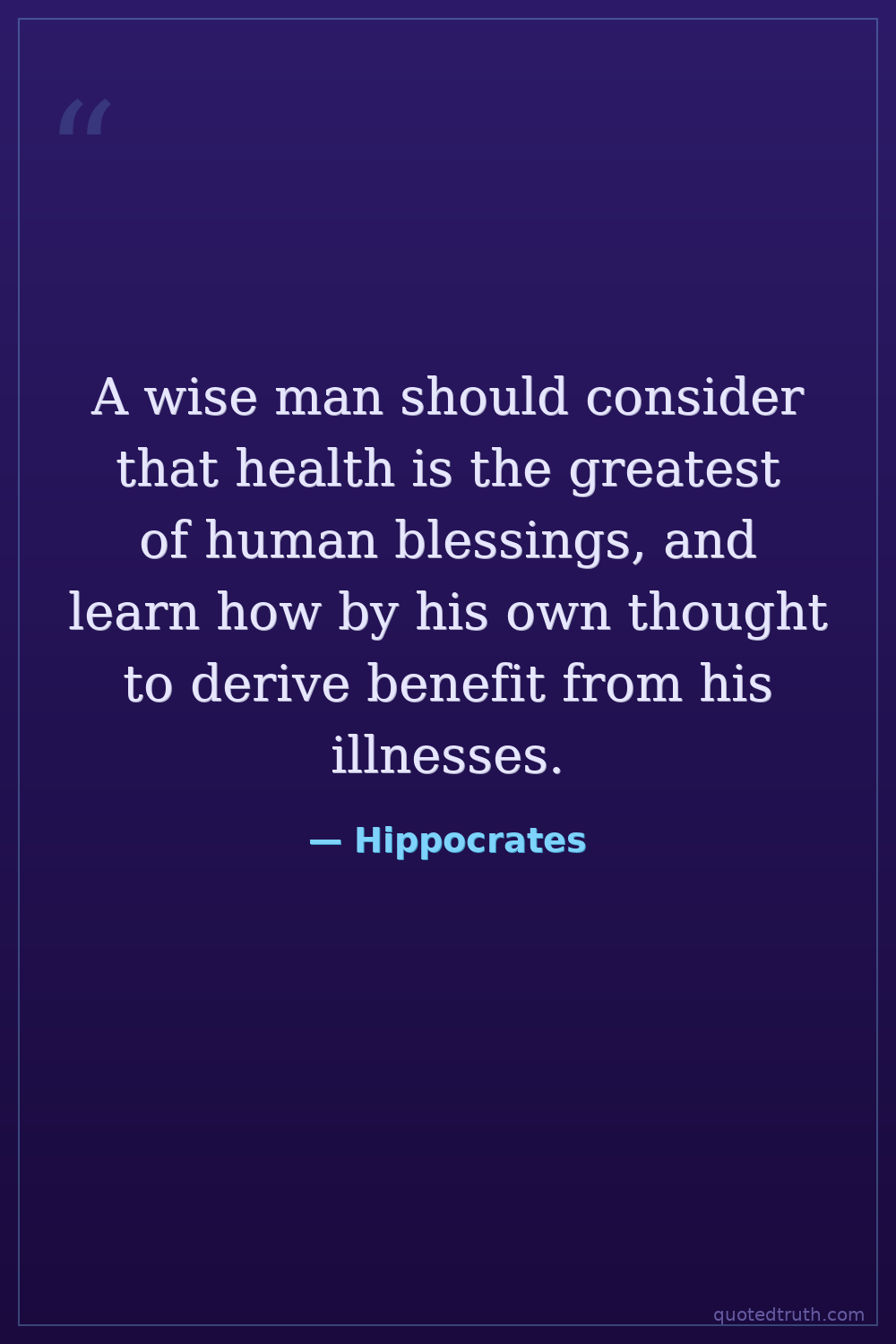
A wise man should consider that health is the greatest of human blessings, and learn how by his own thought to derive benefit from his illnesses.
A wise man should consider that health is the greatest of human blessings, and learn how by his own thought to derive benefit from his illnesses.
Click any product to generate a realistic preview. Up to 3 at a time.
* Initial load can take up to 90 seconds — revising the preview in another color is nearly instant.
"The causes of disease are in the air, the water, and the place."
"If you want to live a long life, you must be careful not to eat too much of the same thing."
"The way to health is to have an aromatic bath and a scented massage every day."
"Prayer indeed is good, but while calling on the gods a man should himself lend a hand."
"To do nothing is sometimes a good remedy."
A philosophical statement on the importance of health and learning from ailments.
Date: c. 460-370 BCE
EducationalFound in 2 providers: gemini,grok
2 sources checked
Health is the most valuable thing a person can possess — more precious than wealth or status. Rather than passively enduring illness, a person should actively reflect on what their body is signaling, extract insight from sickness, and adjust their habits accordingly. Turning adversity into self-knowledge transforms illness from pure misfortune into a chance for growth and better understanding of one's own physical wellbeing.
Hippocrates spent his career arguing that disease has natural, not divine, causes — requiring careful observation rather than prayer or ritual. As the founder of systematic clinical medicine, he documented patient histories and environmental factors meticulously. This reflects his core method: rational self-examination. He believed both physician and patient should actively think through illness rather than accept it passively, reflecting his lifelong insistence that understanding the body's signals was the foundation of healing.
In 5th-century BCE Greece, disease was commonly blamed on divine punishment or demonic forces, and treatment meant temple rituals and prayer to Asclepius. Life was short and illness frequent. Hippocrates wrote during Classical Athens, when thinkers like Socrates were championing reason over superstition. Declaring health humanity's greatest blessing and illness a source of personal insight rather than divine curse was a direct challenge to religious medicine and a cornerstone of rational, empirical healing.
AI-generated insights based on extensive research and information for context. Factual errors? Email [email protected].
Your cart is empty