Ada Lovelace — "I am more than ever convinced that the object of the Imagination, as well as of …"
I am more than ever convinced that the object of the Imagination, as well as of the Reason, is to penetrate into the hidden laws of Nature.
I am more than ever convinced that the object of the Imagination, as well as of the Reason, is to penetrate into the hidden laws of Nature.
Click any product to generate a realistic preview. Up to 3 at a time.
* Initial load can take up to 90 seconds — revising the preview in another color is nearly instant.
"The Analytical Engine opens up a new era in the history of scientific investigation."
"The science of operations, as derived from mathematics, is a science of itself, and has its own abstract truth and value."
"The Analytical Engine has no pretensions whatever to originate anything. It can do whatever we know how to order it to perform."
"I am not afraid to challenge conventional wisdom; in fact, I thrive on it."
"I have a peculiar way of looking at things, which is sometimes a disadvantage, but sometimes a great advantage."
Found in 1 providers: grok
1 source checked
Imagination and reason share the same ultimate goal: uncovering nature's deep underlying principles. This rejects the false split between creative and analytical thinking. True understanding requires both intuitive leaps and rigorous logic working together to reveal patterns invisible on the surface—science is not cold calculation but an act of discovery driven equally by vision and evidence.
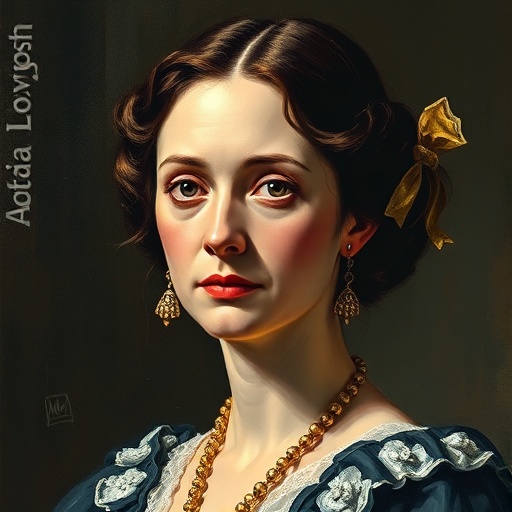
Lovelace embodied this synthesis personally. As the daughter of the Romantic poet Byron yet mentored in mathematics, she refused to separate poetic imagination from analytical precision. Her notes on Babbage's Analytical Engine imagined computing music and symbols—not just numbers—decades before anyone else. She called her approach 'poetical science,' treating mathematical insight as an act of creative penetration.
Writing in the 1840s, Lovelace lived amid the early Industrial Revolution when machinery and empirical science were reshaping civilization. Natural philosophy was fracturing into specialized disciplines. Romantics feared science stripped wonder from the world; materialists dismissed imagination. Lovelace's insistence that imagination belonged inside scientific inquiry challenged both camps during an era urgently debating what human reason could and should accomplish.
AI-generated insights based on extensive research and information for context. Factual errors? Email [email protected].
Your cart is empty