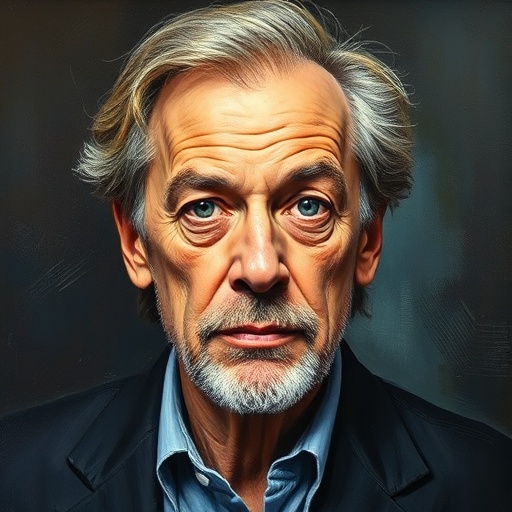
Richard Feynman — "The greatest joy is to understand how nature works."
The greatest joy is to understand how nature works.
The greatest joy is to understand how nature works.
Click any product to generate a realistic preview. Up to 3 at a time.
* Initial load can take up to 90 seconds — revising the preview in another color is nearly instant.
"I was also a little bit of a clown."
"The highest forms of understanding we can achieve are laughter and human compassion."
"Religion is a culture of faith; science is a culture of doubt."
"I just want to understand the world, and I find that the best way to do that is to ask a lot of questions."
"I'm not interested in being a guru. I'm interested in understanding the world."
American theoretical physicist who shared the 1965 Nobel for QED, developed Feynman diagrams, and wrote the Feynman Lectures on Physics. Closely associated with Julian Schwinger (co-Nobelist for QED) and Murray Gell-Mann (Caltech rival and Eightfold-Way physicist). For an intellectual contrast, see Deepak Chopra, physician and quantum-mysticism author — Feynman's Caltech 'cargo cult science' commencement address is the precise template for what he saw as misuse of physics terminology — Chopra-style appropriation of quantum vocabulary for metaphysical claims is the canonical example of what Feynman called 'fooling yourself'.
Found in 1 providers: grok
1 source checked
True happiness comes not from wealth, fame, or comfort, but from genuinely grasping how the physical world operates — why things fall, how light behaves, what atoms do. Understanding the underlying rules of reality is presented as a deeper, more lasting satisfaction than any external reward. It champions curiosity and intellectual discovery as the highest human pursuit available to anyone willing to look closely enough.
Feynman was legendary for his childlike delight in figuring things out — from cracking safes at Los Alamos to playing bongo drums to decoding Mayan astronomy. He famously said knowing the name of a bird is not the same as knowing the bird. His Nobel Prize-winning work on quantum electrodynamics was driven not by careerism but by genuine fascination with how particles and light actually interact at the deepest level.
Feynman worked through mid-20th century physics' golden age — quantum mechanics, nuclear weapons, particle accelerators, and the space race all collapsed centuries of mystery into decades. Yet as science industrialized and specialized, Feynman championed wonder over credential-chasing. His Caltech lectures and Surely You're Joking memoirs pushed back against rote learning, insisting science's purpose was joyful understanding, not institutional prestige.
AI-generated insights based on extensive research and information for context. Factual errors? Email [email protected].
Your cart is empty