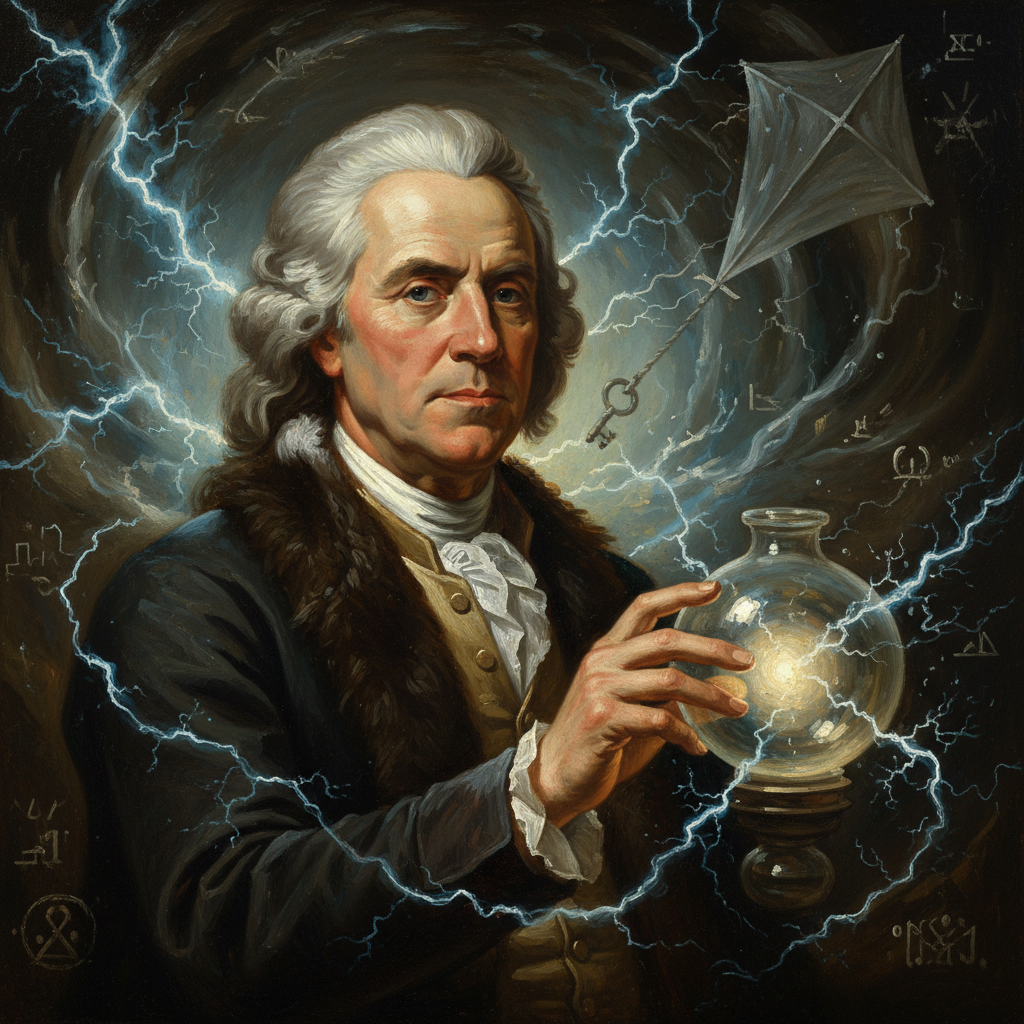
Benjamin Franklin — "Let me add, that only a virtuous people are capable of freedom. As nations becom…"
Let me add, that only a virtuous people are capable of freedom. As nations become corrupt and vicious, they have more need of masters.
Let me add, that only a virtuous people are capable of freedom. As nations become corrupt and vicious, they have more need of masters.
Click any product to generate a realistic preview. Up to 3 at a time.
* Initial load can take up to 90 seconds — revising the preview in another color is nearly instant.
"Keep your eyes wide open before marriage, half shut afterwards."
"Nothing is certain except death and taxes."
"If you would be loved, love and be amiable."
"Without freedom of thought there can be no such thing as wisdom; and no such thing as public liberty, without freedom of speech."
"For every pound of sand you eat, another shilling's yours to keep."
Polymath Founding Father, diplomat, and Poor Richard's Almanack author who helped draft the Declaration of Independence and the Constitution. Closely associated with John Adams (fellow Founder, Massachusetts statesman) and Thomas Jefferson (fellow Declaration drafter). For an intellectual contrast, see Thomas Hutchinson, last royal governor of colonial Massachusetts — Franklin leaked Hutchinson's loyalist correspondence to Boston in 1772 to inflame revolutionary sentiment — Hutchinson represented the colonial-aristocrat crown-loyalty that Franklin's revolution was organized to dismantle.
Reflecting on the nature of governance and morality
Date: Unknown, attributed to his writings on government
ShockingFound in 1 providers: gemini
1 source checked
Freedom requires citizens to govern their own impulses before they can govern themselves politically. When people act selfishly, dishonestly, or without regard for the common good, social order breaks down and society demands strongmen or authoritarian rule to impose stability. Liberty isn't a default state — it's earned and maintained through collective moral character. Corrupt or self-indulgent populations forfeit their capacity for self-rule and inevitably end up needing someone else to control them.
Franklin spent his life building civic institutions — libraries, fire companies, hospitals, philosophical societies — because he believed an educated, moral citizenry was the prerequisite for republican government. His Autobiography treated self-discipline as a civic duty, not personal preference. During the Constitutional Convention, he worried aloud whether Americans were virtuous enough to sustain the republic they had created. A printer, diplomat, and scientist, Franklin trusted neither inherited title nor wealth — only character — as the true foundation of freedom.
In the 1780s and 1790s, the American republic was newly formed and its survival deeply uncertain. The founders debated whether democratic self-rule could endure without monarchy. The French Revolution's descent into terror seemed to confirm that freedom without virtue bred anarchy. Colonial republican theory, drawing on ancient Rome, held virtue as civilization's foundation. Shays' Rebellion, political factionalism, and interstate debt disputes fed founders' fears that corruption could destroy the American experiment before it truly took hold.
AI-generated insights based on extensive research and information for context. Factual errors? Email [email protected].
Your cart is empty