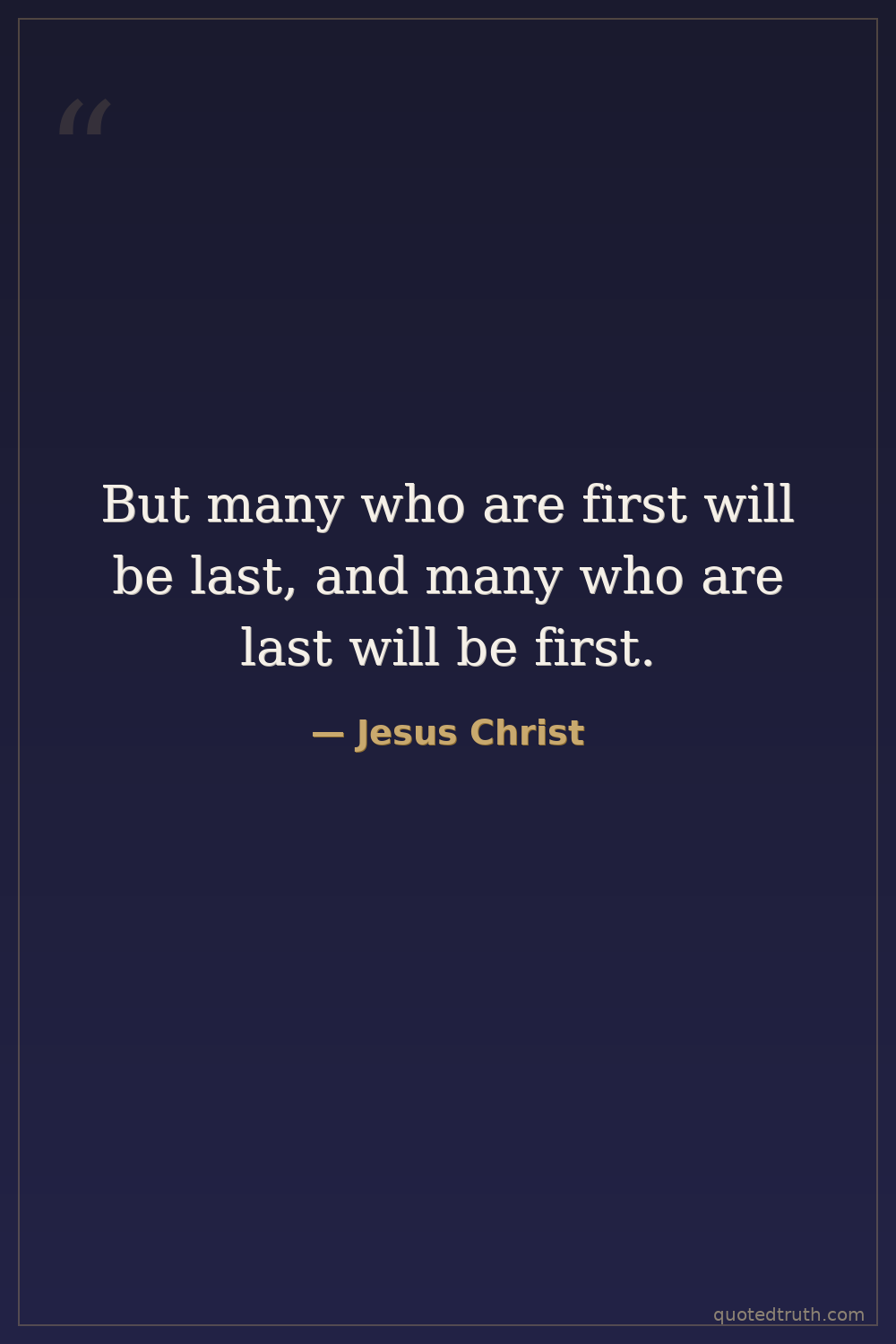
Jesus Christ — "But many who are first will be last, and many who are last will be first."
But many who are first will be last, and many who are last will be first.
But many who are first will be last, and many who are last will be first.
Click any product to generate a realistic preview. Up to 3 at a time.
* Initial load can take up to 90 seconds — revising the preview in another color is nearly instant.
"It is not right to take the children's bread and throw it to the dogs."
"Get behind me, Satan!"
"I did not come to bring peace, but a sword."
"Fear him who has power to cast into hell."
"Every tree that does not bear good fruit is cut down and thrown into the fire."
From a teaching on humility and divine justice (Matthew 19:30)
Date: c. 30-33 CE
PhilosophicalFound in 1 providers: gemini
1 source checked
Worldly rankings will be overturned. People who seem powerful, wealthy, or important now may end up at the bottom, while those society dismisses as insignificant, poor, or overlooked will rise to the top. Status in this life does not predict status in what truly matters. The ordering people assume is permanent gets flipped, and the scoreboard everyone trusts turns out to be reading the wrong game entirely.
Jesus preached a kingdom where the humble, poor, and marginalized held highest value, directly challenging religious elites and wealthy authorities of his day. He chose fishermen over scholars, ate with tax collectors and prostitutes, and warned rich rulers they would struggle to enter heaven. This reversal theme runs through his Beatitudes, parables, and his own trajectory from carpenter to crucified criminal to resurrected Christ worshipped globally.
First-century Judea operated under rigid hierarchy: Roman occupiers on top, then Herodian rulers, temple priests, Pharisees, landowners, with peasants, lepers, women, and Gentiles at the bottom. Honor and shame governed social life, and religious purity codes reinforced exclusion. Saying the last would be first was genuinely scandalous, threatening priestly authority and Roman order alike, which helped fuel the opposition that ultimately led to his execution.
AI-generated insights based on extensive research and information for context. Factual errors? Email [email protected].
Your cart is empty