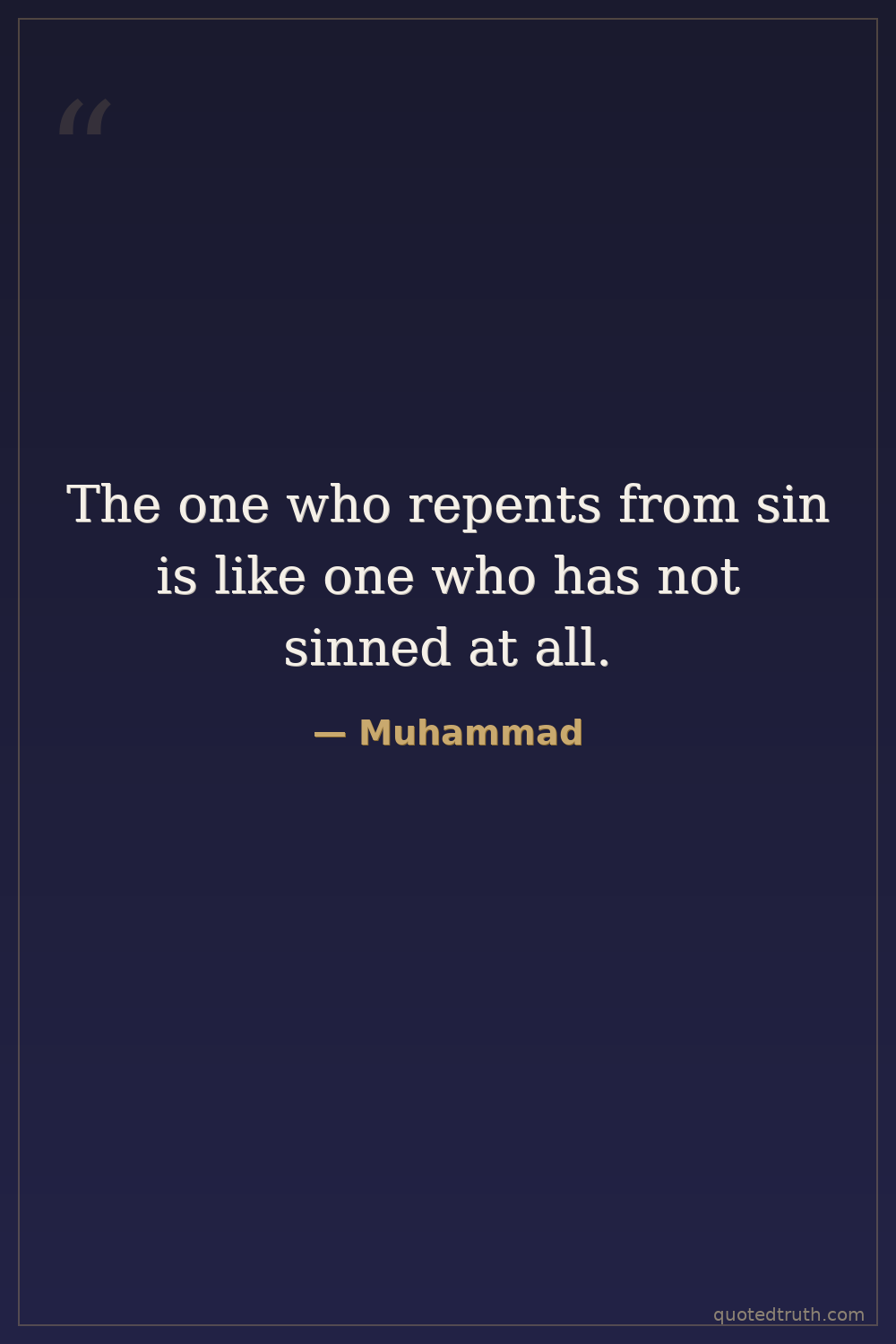
Muhammad — "The one who repents from sin is like one who has not sinned at all."
The one who repents from sin is like one who has not sinned at all.
The one who repents from sin is like one who has not sinned at all.
Click any product to generate a realistic preview. Up to 3 at a time.
* Initial load can take up to 90 seconds — revising the preview in another color is nearly instant.
"A good word is charity."
"Kill any pagan you encounter on the spot."
"Beware of suspicion, for suspicion is the falsest of speech."
"The true Muslim is he from whose tongue and hand the Muslims are safe."
"A believer is not stung twice from the same hole."
Found in 1 providers: gemini
1 source checked
Sincere repentance fully erases the moral weight of a wrongdoing. When a person genuinely regrets what they did, turns away from it, and commits to doing better, their record is wiped clean as if the offense never occurred. The statement rejects the idea that mistakes permanently define a person. Guilt is not meant to be carried forever; transformation restores you to the same standing as someone who never fell short in the first place.
Muhammad built his prophetic mission on mercy and moral renewal, welcoming former enemies, polytheists, and hardened offenders into the Muslim community after they repented. He forgave the Meccans who persecuted him for over a decade upon conquering the city in 630 CE. This saying reflects his consistent teaching that God's mercy outweighs wrath, and it matches his personal practice of accepting repentance from figures like Hind and Wahshi, who had killed his own uncle Hamza.
Seventh-century Arabia operated on tribal honor codes where bloodshed demanded vengeance and shame could follow a family for generations. Pre-Islamic justice rarely offered a path back for wrongdoers. Muhammad's message arrived during constant intertribal feuding, slavery, female infanticide, and rigid clan loyalties. Declaring that repentance fully restores a person was socially radical, dissolving permanent stigma and enabling former raiders, slave owners, and rival fighters to rebuild identities within the new Medinan community he established after 622 CE.
AI-generated insights based on extensive research and information for context. Factual errors? Email [email protected].
Your cart is empty