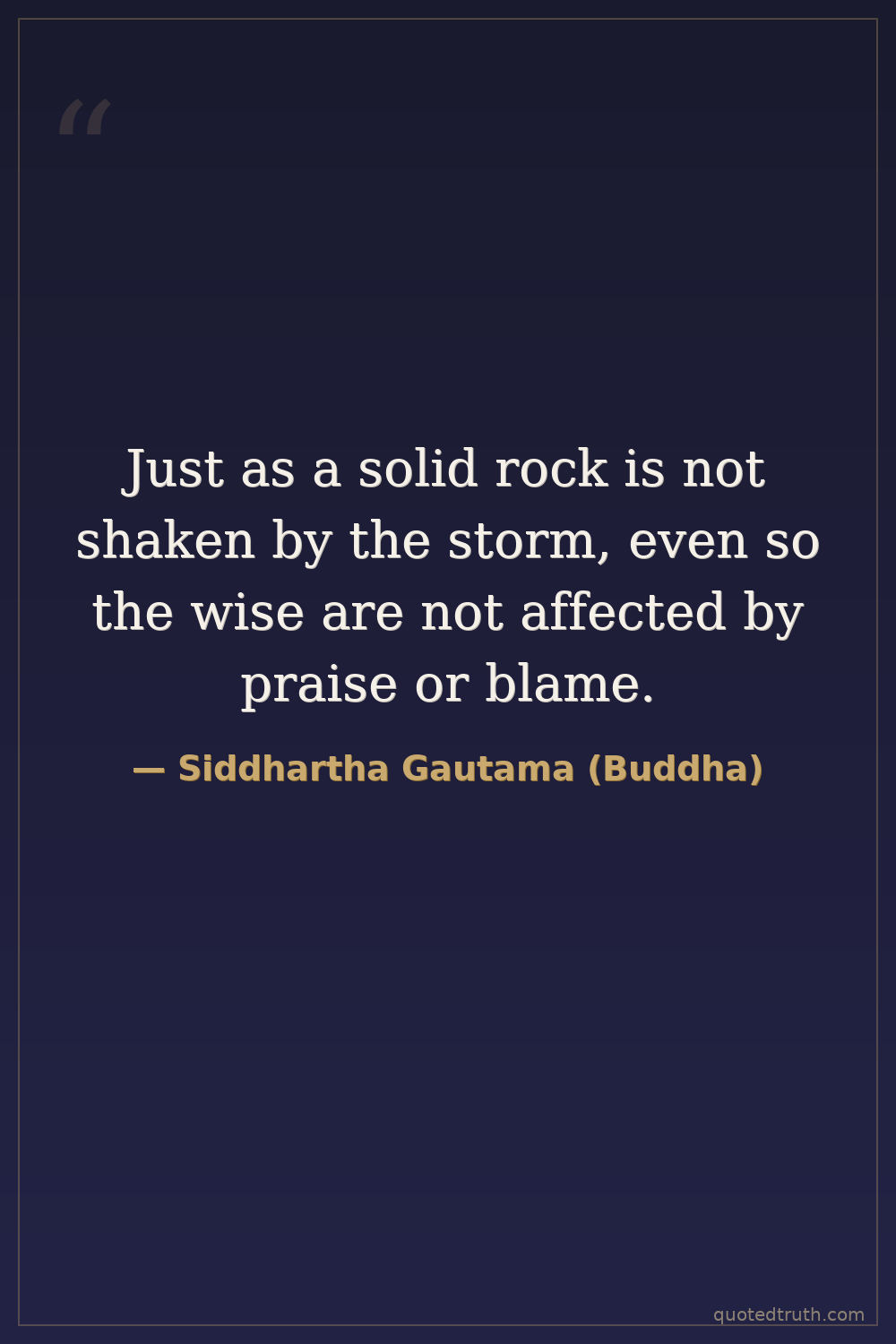
Siddhartha Gautama (Buddha) — "Just as a solid rock is not shaken by the storm, even so the wise are not affect…"
Just as a solid rock is not shaken by the storm, even so the wise are not affected by praise or blame.
Just as a solid rock is not shaken by the storm, even so the wise are not affected by praise or blame.
Click any product to generate a realistic preview. Up to 3 at a time.
* Initial load can take up to 90 seconds — revising the preview in another color is nearly instant.
"To be idle is a short road to death and to be diligent is a long road to life."
"When the mind is pure, joy follows like a shadow that never leaves."
"'As I am, so are they; as they are, so am I.' Comparing others with oneself, do not kill nor cause others to kill."
"Do not dwell in the past, do not dream of the future, concentrate the mind on the present moment."
"It is during our darkest moments that we must focus to see the light."
From the Dhammapada (Verse 81), a teaching on equanimity
Date: c. 5th-6th Century BCE
PhilosophicalFound in 1 providers: gemini
1 source checked
The quote says that a wise person stays steady and unmoved when others compliment or criticize them, just like a massive boulder doesn't budge when winds howl around it. Outside opinions, whether flattering or harsh, shouldn't shake your inner stability. Real wisdom means your sense of self doesn't rise and fall based on what people say about you. You stay grounded in who you are regardless of external noise.
Siddhartha abandoned his royal status as a Shakya prince to pursue enlightenment, rejecting both the admiration of palace life and the judgment of those who saw him as a beggar. After awakening under the Bodhi tree, he faced adoration from followers and scorn from rival teachers equally. His teaching of equanimity, one of the Four Immeasurables, grew directly from this lived practice of detachment from ego-driven reactions to worldly opinion.
In 5th-century BCE northern India, the Vedic Brahminical order emphasized social status, ritual purity, and caste-based honor, making public reputation central to identity. Rival ascetic movements, the Shramana traditions, were challenging this, producing teachers like Mahavira alongside Siddhartha. Urbanizing kingdoms like Magadha created new merchant classes obsessed with prestige. Against this backdrop, teaching indifference to praise and blame directly subverted the prevailing social currency of honor and shame.
AI-generated insights based on extensive research and information for context. Factual errors? Email [email protected].
Your cart is empty