What it means
Watt describes the exact moment he conceived the separate condenser — his greatest engineering breakthrough. He realized that steam's elastic nature would cause it to flow into a vacuum, and if that vacuum existed in a separate vessel rather than the main cylinder, condensation could occur there instead. This eliminates the catastrophic energy waste of Newcomen's design, where the working cylinder had to be chilled and reheated every single stroke, consuming vast quantities of coal.
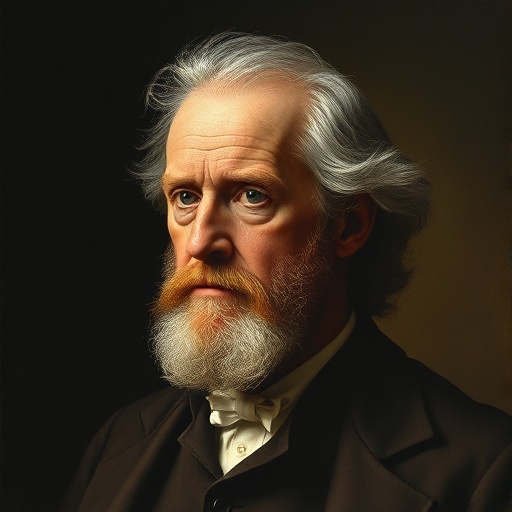
Relevance to James Watt
Watt had spent years repairing a Newcomen model at Glasgow University, obsessed with its inefficiency. This Sabbath walk on Glasgow Green became engineering legend — the moment his deep knowledge of steam physics and his practical frustration converged into a single solution. His patient, methodical character is visible: he didn't force the insight but let it arrive during quiet reflection. The separate condenser he conceived that afternoon would define his entire career and earn him permanent historical immortality.
The era
By 1765, Britain's coal mines desperately needed efficient pumping engines, but Newcomen's 1712 design wasted roughly 99% of its fuel repeatedly heating and cooling the cylinder. The Scottish Enlightenment was flourishing — Watt's colleague Joseph Black had recently described latent heat, directly informing this insight. Steam power was recognized as industrialization's key, but crippling inefficiency blocked widespread adoption. Watt's separate condenser, patented in 1769, demolished those limits and ignited the full Industrial Revolution.
AI-generated insights based on extensive research and information for context. Factual errors? Email [email protected].