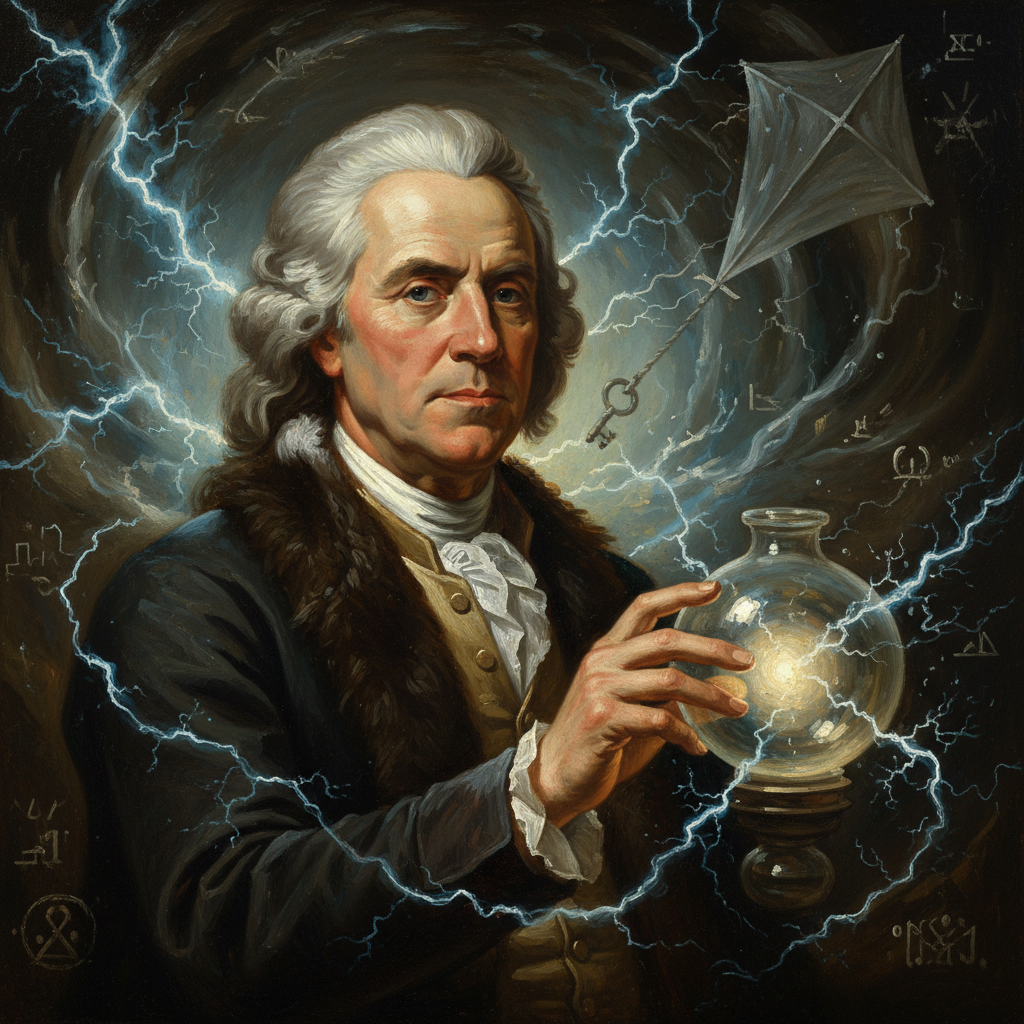
Benjamin Franklin — "Hide not your talents, they for use were made, What's a sundial in the shade!"
Hide not your talents, they for use were made, What's a sundial in the shade!
Hide not your talents, they for use were made, What's a sundial in the shade!
Click any product to generate a realistic preview. Up to 3 at a time.
* Initial load can take up to 90 seconds — revising the preview in another color is nearly instant.
"What is wit, or wealth, or form, or learning, when compared with virtue?"
"There are no gains without pains."
"The sting of a reproach, is the truth of it."
"Keep your eyes wide open before marriage, half shut afterwards."
"Lost time is never found again."
Polymath Founding Father, diplomat, and Poor Richard's Almanack author who helped draft the Declaration of Independence and the Constitution. Closely associated with John Adams (fellow Founder, Massachusetts statesman) and Thomas Jefferson (fellow Declaration drafter). For an intellectual contrast, see Thomas Hutchinson, last royal governor of colonial Massachusetts — Franklin leaked Hutchinson's loyalist correspondence to Boston in 1772 to inflame revolutionary sentiment — Hutchinson represented the colonial-aristocrat crown-loyalty that Franklin's revolution was organized to dismantle.
Found in 1 providers: gemini
1 source checked
The quote urges people to use their abilities rather than conceal them out of modesty or fear. The sundial metaphor is the key: a sundial in shade is useless, no matter how well-crafted. Talents left unused are equally wasted. The message is blunt and practical — your skills have purpose only when applied, visible, and shared with the world. Hiding ability helps nobody, including yourself.
Franklin lived this maxim completely. A self-taught printer's apprentice, he mastered electricity, invented bifocals and the lightning rod, wrote Poor Richard's Almanack for 26 years, and helped found Philadelphia's first library, hospital, and fire company. He became a diplomat, scientist, and Founding Father — all by relentlessly deploying his abilities in public service. For Franklin, hiding talent was not humility; it was negligence.
Colonial America in the 1700s had few institutions and scarce educated individuals. The Enlightenment celebrated reason and practical knowledge as tools to improve society, not private possessions. In a rapidly developing colony short on expertise, wasting skills carried real communal costs — communities depended on capable people contributing openly. Public contribution was civic duty, and Poor Richard's Almanack itself was Franklin's vehicle for broadcasting practical wisdom as widely as possible.
AI-generated insights based on extensive research and information for context. Factual errors? Email [email protected].
Your cart is empty