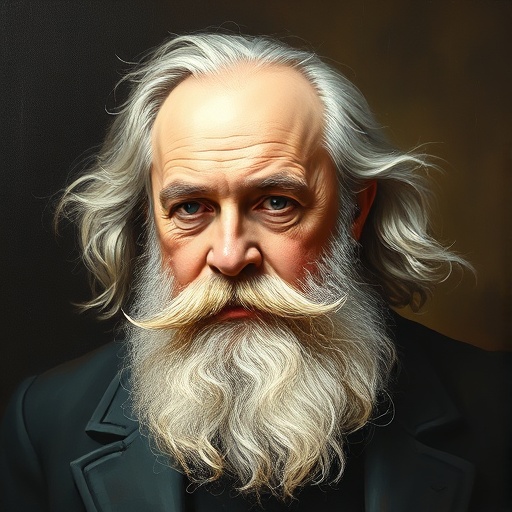
Dmitri Mendeleev — "I have achieved an inner freedom."
I have achieved an inner freedom.
I have achieved an inner freedom.
Click any product to generate a realistic preview. Up to 3 at a time.
* Initial load can take up to 90 seconds — revising the preview in another color is nearly instant.
"There is no death, but only change."
"The future of Russia is in its oil and its people."
"My father was a director of the local gymnasium, and my mother was a woman of strong character and great intelligence."
"I have been called a charlatan, a madman, and a dreamer, but I have always pursued the truth."
"Science begins where measurement begins."
Found in 1 providers: gemini
1 source checked
The speaker has reached a state of mental and emotional independence, no longer controlled by external pressures, opinions, or circumstances. Inner freedom means your thoughts, choices, and sense of worth come from within rather than from others' approval or society's demands. It's a hard-won psychological sovereignty where you act from your own convictions and remain steady regardless of what the world throws at you or expects from you.
Mendeleev lived this independence throughout his career. He defied Russian academic conformity, was denied the Nobel Prize due to political feuds with Arrhenius, and was pushed out of St. Petersburg University in 1890 for supporting student protests. He married his second wife against Orthodox Church rules, openly criticized Tsarist policies, and trusted his own pattern recognition enough to predict undiscovered elements. His periodic table itself was an act of intellectual freedom from prevailing chemistry dogma.
Mendeleev worked in 19th-century Imperial Russia (1834-1907), a society under strict Tsarist autocracy, Orthodox Church authority, and heavy censorship. Scientists were expected to defer to Western European hierarchies and domestic political orthodoxy. The era saw serf emancipation (1861), rising revolutionary movements, and tension between modernization and tradition. Achieving inner freedom was radical in a system where dissent meant exile or worse, and where intellectual autonomy collided constantly with church doctrine and state control.
AI-generated insights based on extensive research and information for context. Factual errors? Email [email protected].
Your cart is empty