What it means
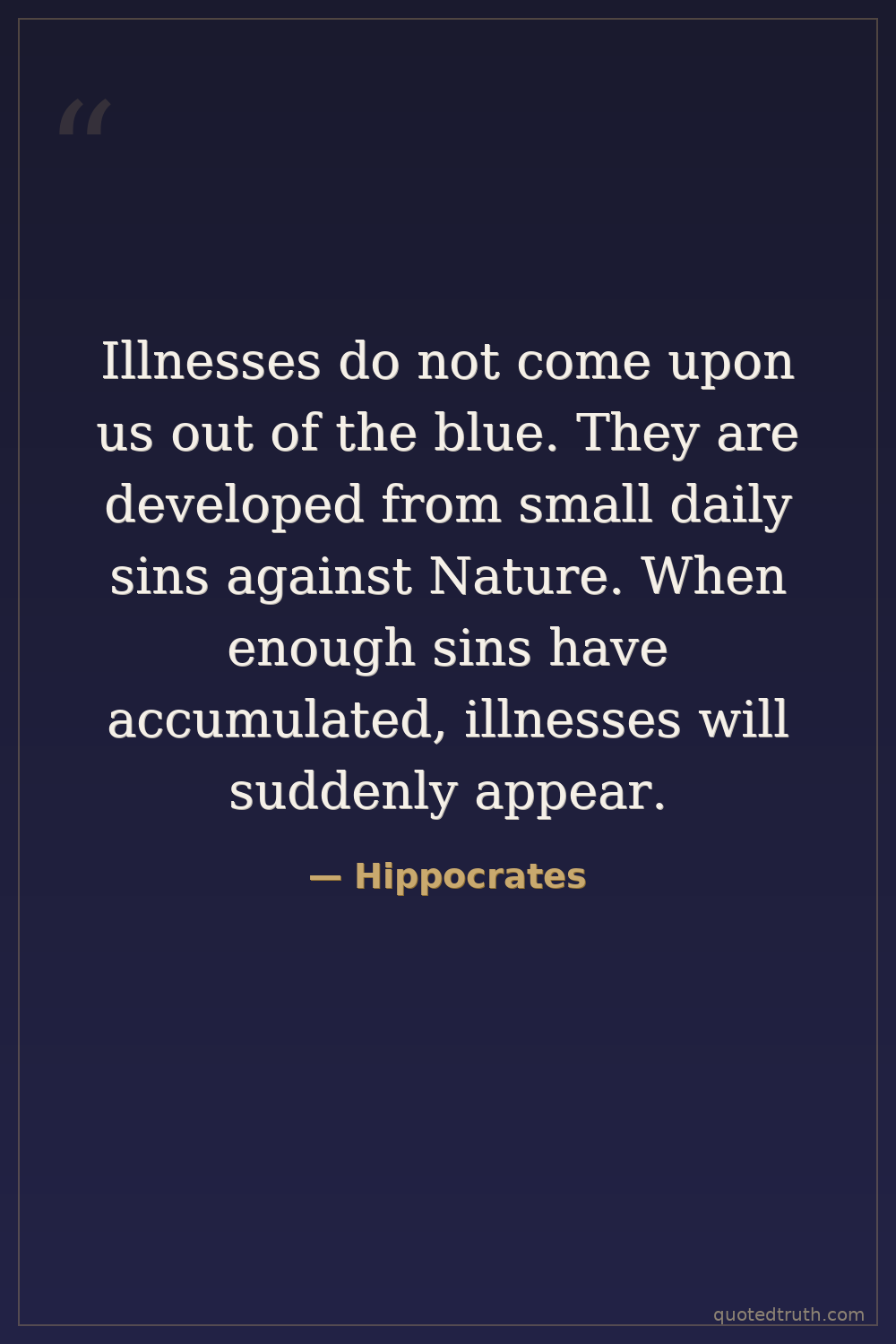
Illness isn't random misfortune — it accumulates from repeated small harmful choices: poor diet, inadequate rest, overindulgence, neglect of the body. These 'sins against Nature' build silently until the body can no longer compensate, and disease suddenly emerges. The quote places responsibility on the individual: daily habits, not fate, determine health outcomes. Modern chronic disease epidemiology and lifestyle medicine now confirm this pattern across heart disease, diabetes, and cancer.
Relevance to Hippocrates
Hippocrates (~460–370 BCE) rejected supernatural explanations for disease, insisting illness had natural, observable causes. His Hippocratic Corpus systematically documented how diet, climate, water, and daily habits disrupted the body's humoral balance. He observed patients clinically over time, noting gradual deterioration before acute episodes. This quote mirrors his core methodology: trace disease backward to lifestyle and nature, not gods or chance — the founding principle of evidence-based medicine.
The era
In 5th-century BCE Greece, disease was widely attributed to divine punishment — temples of Asclepius offered prayer-based healing rituals. Hippocrates practiced during the Greek rationalist revolution, when thinkers like Democritus began explaining the world through natural laws rather than myth. His claim that illness arises from accumulated natural causes directly challenged priestly medical authority and religious fatalism, making this a culturally subversive and scientifically radical assertion for its time.
AI-generated insights based on extensive research and information for context. Factual errors? Email [email protected].