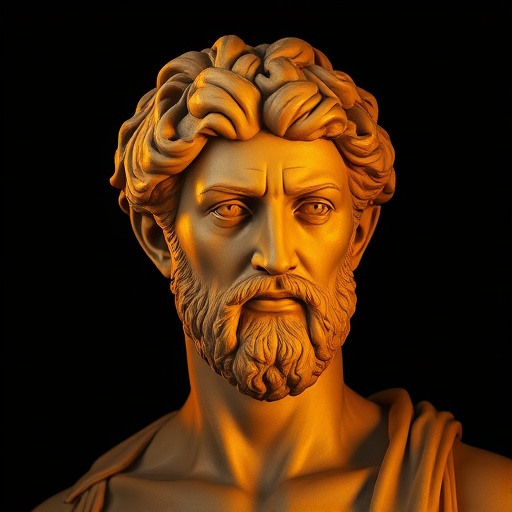
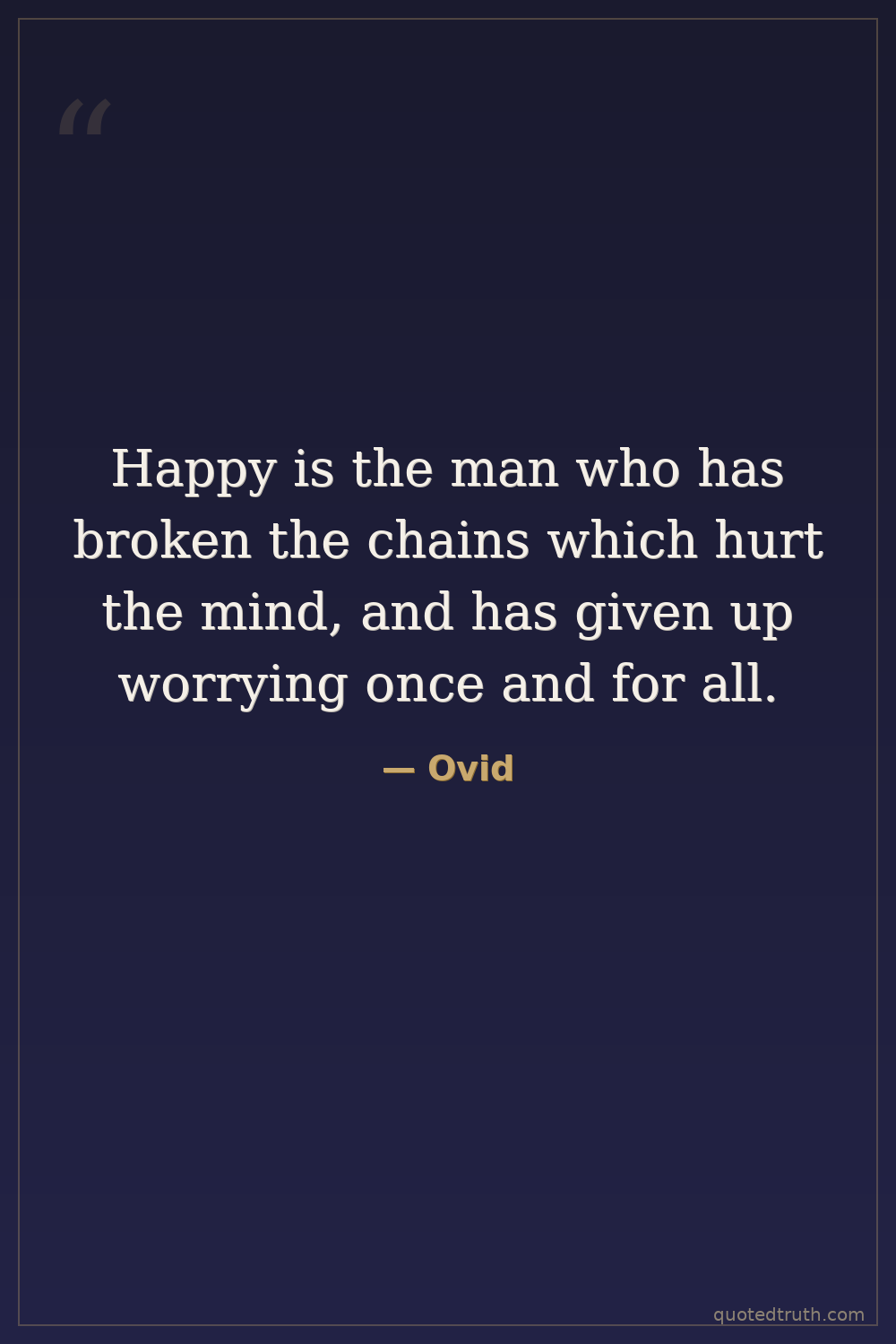
Ovid — "Happy is the man who has broken the chains which hurt the mind, and has given up…"
Happy is the man who has broken the chains which hurt the mind, and has given up worrying once and for all.
Happy is the man who has broken the chains which hurt the mind, and has given up worrying once and for all.
Click any product to generate a realistic preview. Up to 3 at a time.
* Initial load can take up to 90 seconds — revising the preview in another color is nearly instant.
"Adde quod in magnis et laudem et lucra futuri."
"Dignity and love do not blend well, nor do they continue long together."
"Note too that a faithful study of the liberal arts humanizes character and permits it not to be cruel."
"Chance is always powerful. Let your hook be always cast; in the pool where you least expect it, there will be a fish."
"By the slow process of time, the hardest things are softened."
Roman poet whose Metamorphoses (8 CE) is the longest surviving Latin poem and Western literature's main pagan-mythology source. Closely associated with Virgil (the Aeneid poet and other Augustan poetic giant) and Horace (third Augustan-era major poet). For an intellectual contrast, see Augustus, Roman emperor (27 BCE – 14 CE) — Augustus exiled Ovid to Tomis on the Black Sea in 8 CE, reasons tied to his erotic poetry (Ars Amatoria) and possible knowledge of imperial-family scandal — Augustus represented Roman moral-restoration politics that Ovid's witty erotic verse was structurally against.
Found in 1 providers: gemini
1 source checked
Your cart is empty