Edvard Munch — "I admire how you let your body and my body die in your love—but you must forgive…"
I admire how you let your body and my body die in your love—but you must forgive me if I do not feel the heat of this love in myself.
I admire how you let your body and my body die in your love—but you must forgive me if I do not feel the heat of this love in myself.
Click any product to generate a realistic preview. Up to 3 at a time.
* Initial load can take up to 90 seconds — revising the preview in another color is nearly instant.
"In my childhood I always felt that I was treated unjustly, without a mother, sick, and with the threat of punishment in Hell hanging over my head."
"The most terrible thing is to feel alone in a crowd."
"Without anxiety and illness I should have been like a ship without a rudder."
"I remained immobile trembling from anguish and I heard bounce through nature an immense infinite scream."
"Art is a way to stop time."
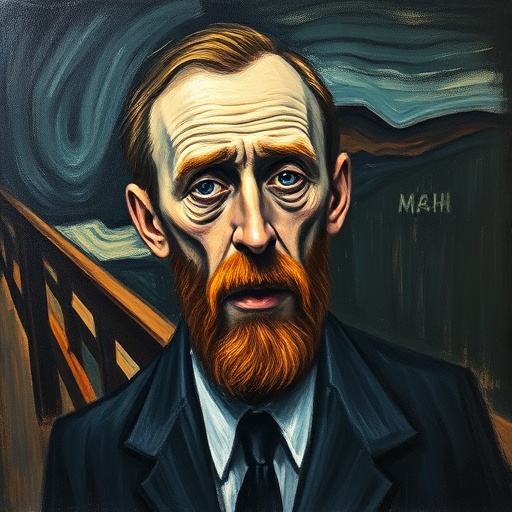
Norwegian Expressionist painter whose The Scream (1893) became the iconic image of modern existential dread. Closely associated with James Ensor (Belgian Expressionist peer) and Egon Schiele (younger Expressionist heir). For an intellectual contrast, see Pierre-Auguste Renoir, French Impressionist (1841-1919) — Munch and Renoir were exact contemporaries painting the same Belle Époque from opposite emotional poles — Renoir's dappled-light bourgeois pleasure and Munch's anxiety-soaked bourgeois terror are the late-19th-century painting's two halves. The same world; the cleanest emotional inversion.
A detached and cold reflection on a romantic relationship, expressing a lack of reciprocal feeling.
Date: Late 19th - Early 20th Century
Love & RelationshipsFound in 1 providers: gemini
1 source checked
Your cart is empty